William Greaves, who was first an actor before moving behind the camera to become a pioneering documentarian, had invited every surviving creator during the Harlem Renaissance he could locate back in 1972 to Duke Ellington’s home in Harlem for a party. Over the next four hours, Greaves filmed as this group of artists reminisced and debated about their experiences and how they had shaped the culture.
The director behind the "Symbiopsychotaxiplasm" films struggled for years trying to figure out how to best utilize his footage. But Greaves died in 2014 at the age of eighty-seven with the film incomplete. Louise Greaves, his widow, would go on working on the project until she died in 2023. Then their son, David and daughter, Liani would continue on with this work until they were able to finally complete the film.
"Once Upon a Time in Harlem" made its world premiere at this year's Sundance Film Festival where it was well received and highly praised. The documentary will be released theatrically this fall by Neon who won the bidding war following the screening during the fest.
"Once Upon A Time In Harlem" is due in US theaters on October 16, 2026
Where & When: Nuart Theater, West Los Angeles, CA. July 27, 2024 7:30 PM
The filmmaking team of Michael Powell and Emeric Pressburger are responsible for some of the most exquisite, breathtaking works of world cinema, which includes "A Matter of Life and Death", "Black Narcissus" and "The Red Shoes", that have gone on to become important classics in motion picture history. Introduced by producer, Alexander Korda in 1939, the British Powell had worked in various roles in the early days of the film industry beginning in France before returning home to get an opportunity to write and direct while Pressburger, Hungarian-born of Jewish heritage, had begun his career as a journalist before turning towards screen writing, forced to migrate a couple of times before landing in Britain due to the rise of the Nazis. Pressburger was asked to doctor the script for the World War I spy thriller, "The Spy in Black" that Powell was directing which began the cinematic partnership between these men, eventually making over twenty films over the course of their career together.
The extraordinary documentary, "Made in England: The Films of Powell and Pressburger" goes into great detail about the influence and craftsmanship of these groundbreaking filmmakers.
We have executive producer, Martin Scorsese as our on-screen narrator, delivering a masterclass on these highly esteemed and inspirational film creators in this captivating doc, directed by David Hinton. The now eighty-one legendary director begins by recalling his own childhood history with him being forced to be indoors most of the time due to being an asthmatic. This lead to him being brought to movie theaters where his love of cinema was developed. By the time Scorsese became a teenager, he had become obsessed with the work of Powell and Pressburger which would greatly impact not only his desire to become a filmmaker but his own cinematic style.
After making two more films together, realizing they work well together with a common viewpoint regarding cinema, Powell and Pressburger formed a partnership which would be known as "The Archers". While Pressburger would work on the initial script outline and Powell would essentially direct the film, together they would shape the complete movie with the screen credit going to both as writer, producer and director. The Archers were early indie filmmakers; experimenting with structure, demanding control over their work and never wanted to be forced to compromise on their productions. The duo assembled a regular group of actors and crew members that they worked well with and wanted to participate in fulfilling their creative vision.
Powell and Pressburger were enlisted to do their part for the war effort by creating films that would inspire and uplift during this harrowing time. However, they chose to do this on their own terms. "The Life and Death of Colonel Blimp" may have been a pro-British, romantic war drama but it was also a satire on the country's army, delivering soft jabs at the leadership. The original intention of "A Matter of Life and Death" was to help improve the tense relations between the late arriving American soldiers stationed in the UK and the war weary, British public. But what it became was a surreal romantic fantasy in stunning Technicolor set during the World War involving a British airman (David Niven) who survives a plane crash and falls in love with an American radio operator (Kim Hunter) only he begins to have visions of an angel summoning him to the afterlife.
The end of the war allowed the filmmakers to let their imaginations soar even further. "Black Narcissus" revolves around the increasing strain within a small convent of nuns trying to establish a school on top of an isolated mountain in the Himalayas. Filled with unexpected simmering sexual tension and grounded by exceptional realism, this film firmly establishes Powell and Pressburger as true cinematic artists highlighted by the Oscar-winning cinematography of Jack Cardiff.
But what is considered by many viewers and critics as this team's greatest masterpiece would be their follow-up feature, "The Red Shoes" from 1948. Boldly wanting to experiment with how music and visuals could effectively be used in a film, "The Red Shoes" is set in the world of ballet, exploring a dancer's conflict between living for their art and finding space to have a personal life. Determined to have a professional dancer who could act in the lead role, the duo managed to lure a very reluctant Moira Shearer, a ballerina from Scotland, to do the part after pursuing her for a year. The one sequence the film is best known for is the seventeen minute ballet centerpiece inspired by the Hans Christian Anderson fairy tale which the film is based. Far from a traditional filmed dance number that was commonly done at the time, the scene utilizes editing, close-ups and impressionistic visual effects, creating an undeniable cinematic experience.
By the mid-1950's, The Archers had decided to pursue some separate creative paths. Pressburger would have two novels published and write a few screenplays for other filmmakers. Powell had begun working on some solo film projects, most notably beginning with the controversial, "Peeping Tom" in 1960. During this period, they came together to make a film, "They're a Weird Mob" in 1966 with Pressburger using a pseudonym, "Richard Imrie". But their final collaboration together would be "The Boy Who Turned Yellow", a 1972 feature made for the UK non-profit, Children's Film Foundation.
Scorsese's longtime film editor, Thelma Schoonmaker would go on to marry Powell in 1984 (after introducing the two to each other). This gave Scorsese an even greater opportunity to connect with Powell, allowing him to pick his brain over the films his cinematic idol had made and receive advice from him on the movies he was making at the time, ultimately forming an even closer bond. This relationship also helped gain access to a trove of archival footage seen in the film with interviews with the filmmakers, personal home movies and behind-the-scenes recordings.
Hinton, a British director of several documentary shorts and episodes of television series, basically gets out of the way, simply allowing the rapid-fire, insightful discussion by Scorsese and the resonant beauty of the images by Powell and Pressburger to do much of the work in "Made In England". While there are moments in his conversations that can feel a bit dry like a college lecture, Scorsese is a passionate cheerleader, reiterating why he loves their films and why you really should too. Long before they even ended their partnership, the work by these filmmakers would fall out of favor and they were never properly appreciated during their career by the critics of their native country. But time allows an opportunity for second look in order to consider a greater appreciation. "Made In England" is an excellent, helpful guide into the cinema of Powell and Pressburger and a wonderful encouragement into seeking out their movies.
Where & When: Lumiere Cinema at the Music Hall, Beverly Hills, CA. April 2, 2024 8:10 PM
Fresh out of the prestigious Central Saint Martins art college, John Galliano quickly made a name for himself in the world of haute couture with his boldly daring, somewhat wacky, creative style. After receiving rapturous praise for his own line, he was appointed to take over the major fashion house, Givenchy. And as he continued to thrive, Galliano received even more widespread critical acclaim, making him a superstar in the fashion field. But it all came crashing down years later after several booze-driven, racist and antisemitic rants would bring an end to his reign.
In the documentary, "High and Low: John Galliano", the director Kevin Macdonald allows Galliano to provide his own version of events, not necessarily to offer excuses to what lead to his downfall but to explain how his life experiences and work overload may have contributed to his appalling behavior.
At only twenty-three, the Spanish born, British raised Galliano became greatly admired for his prodigious talent and effervescent personality. The collection he created for his graduation was inspired by Napoleon and the French Revolution, entitled Les Incroyables. It was a sensation, helping Galliano secure backing for his own clothing label in 1987. And while there was no doubt about his skill as a couturier, much of his clothing was not considered wearable and Galliano had little patience for the financial side of his business.
In search of new financial backing, Galliano headed to Paris and with the support of some important people in the business (which included American Vogue editors, Anna Wintour and Andre Leon Talley), he managed to secure the funding he needed to continue. With the retirement of Hubert de Givenchy, Galliano was given the reins to design for the clothing line in 1995, receiving high praise from the media and fashion elite. And only a year later, he was moved over as creative director for an even bigger fashion house: Christian Dior where he would remain for the next fifteen years.
All was seemingly going well for Galliano but the pressures of designing several collections multiple times a year lead him to rely on alcohol and other substances for comfort and artistic stability. Then came the moment when he was sitting in a Paris cafe, talking to a couple next to him, and abruptly spewed an antisemitic tirade. It's unclear what triggered his hostile reaction but the troubling encounter was captured on a phone's video camera that surfaced shortly before the unveiling of his latest collection in 2011. The reaction was swift with Galliano fired from Dior and becoming publicly vilified.
Macdonald, who won the 1999 Best Documentary Feature Oscar for "One Day in September" and previously made docs on musicians, Bob Marley and Whitney Houston, allows Galliano in the film to freely discuss his life and career, purposefully not pushing back or challenging his recollections from anyone who worked or was acquainted with the designer. As he recounts his story, Galliano is open, charming and cheerfully chatty, looking back very proudly on what he had been able to accomplish. Yet when reaching the point when needing to discuss the incident, Galliano becomes, somewhat understandably, visibly guarded with his memory now failing him to recall specific details. While he does offer apologies for his behavior, he does seem to want this event to appear more like a terrible misunderstanding than a hateful outburst where he praised the Nazi party.
There are appearances in "High and Low" by former business partners, actors and fashion people who all remain deeply devoted, continuing to praise Galliano and downplaying or simply ignoring the unsavory scandal. The super-model, Naomi Campbell goes as far to state that she has not watched the damning video and doesn't have to, proclaiming that her personal experiences with Galliano is all she needs to know.
"High and Low" seems more motivated in rehabilitating Galliano's reputation as a premiere fashion designer than offering a more honest discussion into antisemitism or an examination on the unrealistic demands placed on creators in the fashion industry. Only three years after his firing, Galliano was hired to join the fashion house, Maison Margiela where he is still currently working although with a much lower profile. While I don't believe Galliano should necessarily receive a lifetime ban from being a professional designer, it does make me uncomfortable in "High and Low" how most of the fashion folk who are interviewed in this make the incident seem blown out of proportion and simply an overreaction.
For those fans of cinema who are interested in understanding how and why we respond to certain films, Turner Classic Movies is presenting a new 6-part series, "The Power of Film", beginning on January 4th and continuing through the next five Thursdays.
Based on the book by Howard Suber, a UCLA film professor and created by documentary filmmakers, Doug Pray and Laura Gabbert, "The Power of Film" explores the cultural and emotional impact film provides for audiences, utilizing footage from acclaimed and beloved movies to illustrate examples of the extraordinary power of cinema. Professor Suber, who co-wrote the series, will share his thoughts throughout the series, discussing film as an art form from a historical and critical aspect and pointing out filmmakers, since the very beginning of the motion picture industry, who have used their skills at storytelling to share their own personal and political viewpoints to the world in order to possibly influence a cultural shift in our society.
Dave Karger will host the series, joined by Pray and Gabbert, and after each new episode, TCM will program some of the memorable films discussed in the series in order to perhaps look at them in a new way and to better understand why they have continued to endure.
Where & When: Laemmle Royal, West Los Angeles, CA. September 28, 2023 7:00 PM
You may not be familiar with the name Bethann Hardison unless you're really intrigued by the inner workings of the fashion world. And Hardison's story would be fascinating enough with her being an unassuming African American woman from Bed-Stuy who managed to beat the odds at the time by becoming a popular international model then going on to start her own successful modeling agency. But what the documentary, "Invisible Beauty", co-directed by Hardison and Frédéric Tcheng, brings into focus is what the former model has become best known and greatly admired for by many who work in the style industry: her outspoken activism in fearlessly challenging the status quo and being extremely vocal in regard to how the business over the years has inadequately dealt with race, more than willing to call individuals out by name when necessary.
Born and raised in New York City, Hardison attended FIT and NYU Tisch School of the Arts before landing a job as seller in the garment district. Her life would make a dramatic change after meeting designer, Willi Smith, the man behind the whimsical fashion line, WilliWear and would go on to be regarded as one of the most successful African American designers after his passing in 1987 from complications of AIDS. First becoming his fit model, Hardison smoothly transitioned into working in front of the camera.
A highlight of her modeling career came when she was a part of the largely African American models who came to France in 1973 for the Battle of Versailles Fashion Show, a fund-raising, face-off event between French and American designers. While the French had an elaborate yet stiff presentation, the Americans (which included Oscar de la Renta, Halston and Anne Klein) only had the models to display their clothes on the runway which they did with a carefree style and exuberance, bringing the audience wildly to their feet.
By 1981, Hardison changed her focus from modeling to becoming a model booking agent. Three years later, she formed the Bethann Management Agency which represented a diverse range of models that most agencies probably would never have considered. Some of the beautiful faces that Hardison repped included Roshumba, Kimora Lee Simons, Veronica Webb (who became the first African American model to land a major cosmetics contract) and Tyson Beckford, one of the world's most famous male models who enjoyed a long, exclusive contract with designer Ralph Lauren.
And it was around this time that Hardison went on to form Black Girls Coalition with fellow former model, Iman to celebrate these women, uplifting and guiding these models to give back to the community. Later she became a major force not long after the turn of the century when the industry went backwards by actively not using models of color. Hardison quickly went to work organizing a town hall meeting to address this lack of diversity in fashion and advertising.
Originally, Hardison wanted to make a film about the fashion industry but people around her wisely suggested she narrow her focus. She teamed up with Tcheng, who has a history of creating captivating documentaries on important figures in fashion (Valentino, Diana Vreeland, Halston) and together came up with the concept to shape "Invisible Beauty" around her struggle to write her memoir, allowing this film to organically reflect back on her life.
Hardison married young and briefly, having a son, Kadeem who would become known as an actor, appearing in "The Cosby Show" spin-off sitcom, "A Different World". She's aware that she never achieved a perfect balance between her career and motherhood, leaving her relationship with her son today complicated and, at times, strained. Yet Hardison is maternal and nurturing, caring for the young models that came her way, mentoring and offering her home as shelter when needed.
"Invisible Beauty" is an inspirational document which details of a life well-lived. Hardison is certainly filled with contradictions yet she's a generous spirit who offered her experiences and created opportunities to made sure that those who followed after her could also benefit to have an equal and fair chance to flourish in the arduous fashion business.
Where & When: TCL Chinese Theatres IMAX, September 18, 2022 12:20 PM
I still remember clearly the complete shock and disbelief I felt when I heard the news that David Bowie, the influential, enigmatic rock-star alien, had passed away in 2016. With his sensual, otherworldly essence, he gave the impression that he would simply exist forever. Bowie even released a complete new album, "Black Star" two days after he died. At only sixty-nine, the British performance artist, although best known for his innovative music also painted and acted on stage and screen, seemed to have his life tragically cut far too soon. As a musician, Bowie was a true chameleon, continuously shifting and expanding the possibilities of rock & roll. And using his lithe body as a colorful, exhilarating canvas, he helped alter the rigid ideology on gender norms and visual presentation.
Brett Morgen, the filmmaker who has created meditative non-fiction works that have largely focused on seminal figures in pop culture like Hollywood producer, Bob Evans; the still rocking, The Rolling Stones; primatologist, Jane Goodall and the late rock performer, Kurt Cobain, has set his sights on Bowie. "Moonage Daydream", a wildly kinetic mosaic of sound and vision, reflects on the creative life of the rock musician told in his own words, assembled through a series of interviews the artist had given throughout his lengthy career.
Broken up through the different eras of Bowie's intriguing artistic journey, we begin expectedly yet briefly with his early days as an androgynous, shaggy haired mod-rocker before morphing into the genderqueer space alien with a mullet of flaming red-hair, backed-up with his hard-rocking band, the Spiders from Mars. Following this first brush with massive stardom, Bowie shifted gears, not wanting to be defined by Ziggy Stardust, moving into Aladdin Sane with the now-iconic album cover image of the colorful lighting bolt across his face. After a few more albums, he abandoned glam-rock altogether, moving into the Thin White Duke phase and "plastic soul", his homage to American r&b and soul music. Trying to escape years of deep drug addiction in Los Angeles, Bowie heads to Europe, ending up in Germany. Clear-eyed and inspired, he begins to experiment with electronic, ambient sounds, creating a trio of albums later referred to as the "Berlin Trilogy".
With "Moonage Daydream", which is the title of the 1971 song that introduces us to Ziggy Stardust, Morgen has crafted a masterful work of art that poetically explores the roots of Bowie's considerable, wide-ranging artistry. Serving also as editor and utilizing a collision of expressionistic effects, he effectively has Bowie discuss many of his influences and motivations while visualizing his tremendous impact throughout using zippy fast-cuts of various media with the musician's work as a musician and actor. This is the first film about Bowie that has been authorized by his estate, allowing Morgen to use all of his music and have access to Bowie's extensive footage from his personal archives, much of it rarely seen before publicly. Tony Visconti, a musician and producer who had worked with Bowie since his second album in 1969, serves as the film's music producer, helping to put together previously unreleased live tracks with newly created remixed songs for the soundtrack .
Throughout each of his aesthetic and musical transformations, Bowie is revealed to be a true trendsetter and innovator, boldly expressing a queer, rebellious spirit by becoming the face of bisexual chic, wearing make-up and normalizing crossdressing at a time when the world was even less open to such provocative acts. Bowie realized early the power of using short-form film to create alluring imagery and enhance his musical vision, long before people began wanting their MTV in 1981. And he was a natural additional to the music channel which helped propel him into becoming a major pop music superstar with his worldwide smash album, "Let's Dance". Yet the intense pressure and high expectations of this type of fame made Bowie retreat back into his comfort zone of more esoteric musical stylings.
My only real criticism about "Moonage Daydream" would be it's length. While I would be of the mindset that there could never be too much Bowie yet after a while during the one hundred and forty minute runtime, the film does begin to drag a bit and feel overextended largely due to the unstructured format. And I was also left to wonder about the complete exclusion to mention some of the many people, friends, family and colleagues, who contributed significantly to Bowie's success. Thinking this was a creative decision until I saw the segment dedicated to his romance to Iman, the Somali supermodel who is Bowie's widow and love of his life.
Yet it seems strange to completely omit any mention of Angela Bowie, his free-spirited, first wife who clearly had some influence over his early image and opened his mind to a broader, more alternative lifestyle. And she is the mother of his first child, Duncan, now a filmmaker, who went by "Zowie" for the first ten years of his life. The couple both acknowledged their relationship was highly tumultuous with Bowie later admitting that he had married her so she could work in Britain. But they were together for a decade so there might have been something that could have been said, if only briefly.
If you were looking for a documentary filled with warm remembrances by several talking heads, straightforward live performances or salacious details regarding Bowie's drug abuse and various romantic flings, then you will certainly be disappointed. Morgen was far more interested in creating an introspective, visually explosive experience. "Moonage Daydream" is a thrilling, experimental celebration of a true creative genius told in a mesmerizing, deconstructed way that I think the musician would have greatly appreciated.
Where & When: Nuart Theater, West Los Angeles, CA. October 20, 2021 5:10 PM
Available to stream now on AppleTV+
While "The Velvet Underground" is being labeled as Todd Haynes' first documentary, this low-key yet appealing non-fiction film doesn't feel far removed from his previous narrative feature work. Utilizing a vivid, cinematic approach with split-screens filled with energized, montage images and little-seen archival footage from the Warhol Foundation, the filmmaker behind "Poison", "Far From Heaven" and "I'm Not There" realized that this avant-garde band deserved and required a non-fiction film that documented their story unconventionally.
And the Velvet Underground were definitely not a traditional rock band, experimenting with unusual pop structures while taking on subversive subject matter in their songs. Not surprisingly, this group was not appreciated during their time beginning in the late '60's, critically panned and largely ignored by the public. But time eventually allowed listeners to catch up to what the Velvet Underground were creating; merging a bold, offbeat artistic vision with rock music that would become highly influential, leading to the sounds of glam rock, new-wave and punk rock to emerge from their early accomplishments.
It began with the meeting of two disparate musicians; the New York born and raised, Lou Reed, a self-taught guitarist who loved rock and r&b and John Cale, a Welsh multi-instrumentalist who relocated to New York in 1963 to study classical music. They had each performed with varied musicians in style and skill (Reed performed with some short-lived garage bands and Cale worked with a few progressive composers including John Cage) before joining forces, realizing they had a shared taste for the offbeat and experimental.
They recruited Sterling Morrison to play guitar and Angus MacLise on drums, performing together under a variety of different band names before settling on "The Velvet Underground". On the eve of their first paying gig, MacLise quit the band, feeling like they were selling out, and was replaced by Maureen "Moe" Tucker. The Velvet Underground began to draw attention in the local music scene around the city, leading the pop artist, Andy Warhol to become intrigued. He viewed this band as a perfect accompaniment to the unorthodox art he was creating, becoming their manager and producer, although his involvement in the creation of their music was clearly minimal. What Warhol did contribute was getting the Underground signed to a record label, designing their debut album cover art and suggesting that Christa Päffgen, known as Nico, join this band. And while the former German model may not have possessed the best voice for singing, she did have a commanding presence and more than willing to work hard in achieving the desired emotion in the music.
As a young queer man trying to find his way, Haynes found comfort and solidarity in the rebellious music of David Bowie, Roxy Music, the New York Dolls before discovering the Velvet Underground while in college, realizing that this band's singular sound had clearly influenced many of these performers that had followed them. The filmmaker would go on to make "Velvet Goldmine" in 1998, a fictionalized look at the glam rock scene in the 1970's featuring a thinly veiled character based on "Ziggy Stardust"-era Bowie and using details from the lives of Iggy Pop and Lou Reed.
Now with an opportunity to examine the Velvet Underground's legacy, Haynes decided to avoid having music scholars, critics or fans interviewed to discuss the band in the film, using only people who were there to share their thoughts and experiences. That includes the now seventy-nine year old Cale and seventy-seven Tucker; Reed's sister, Merrill Reed Weiner; Mary Woronov, an actress who was a part of Warhol's entourage and Jackson Browne, the musician that was romantically linked to Nico and played on her debut solo album. Morrison (who died at fifty-three in 1995) and Reed (who passed away in 2013 at seventy-one) make appearances through footage of previous interviews.
Despite the inventive visual flourishes and electrifying music, the film rarely matches the same intensity, remaining strangely lo-fi and static. And once the film reaches the Warhol connection and the striking Nico joins the band, "The Velvet Underground" settles in to a more traditional documentary. Yet the film does succeed in capturing the moments of what made the Velvet Underground such a groundbreaking and essential rock band.
With "The Velvet Underground", Haynes has crafted an entertaining and informative documentary that generates long overdue attention to a musical group that was far ahead of it's time. The director wanted to share what had drawn him to their esoteric music, with an ultimate goal to inspire a new generation to seek out this unsung band.
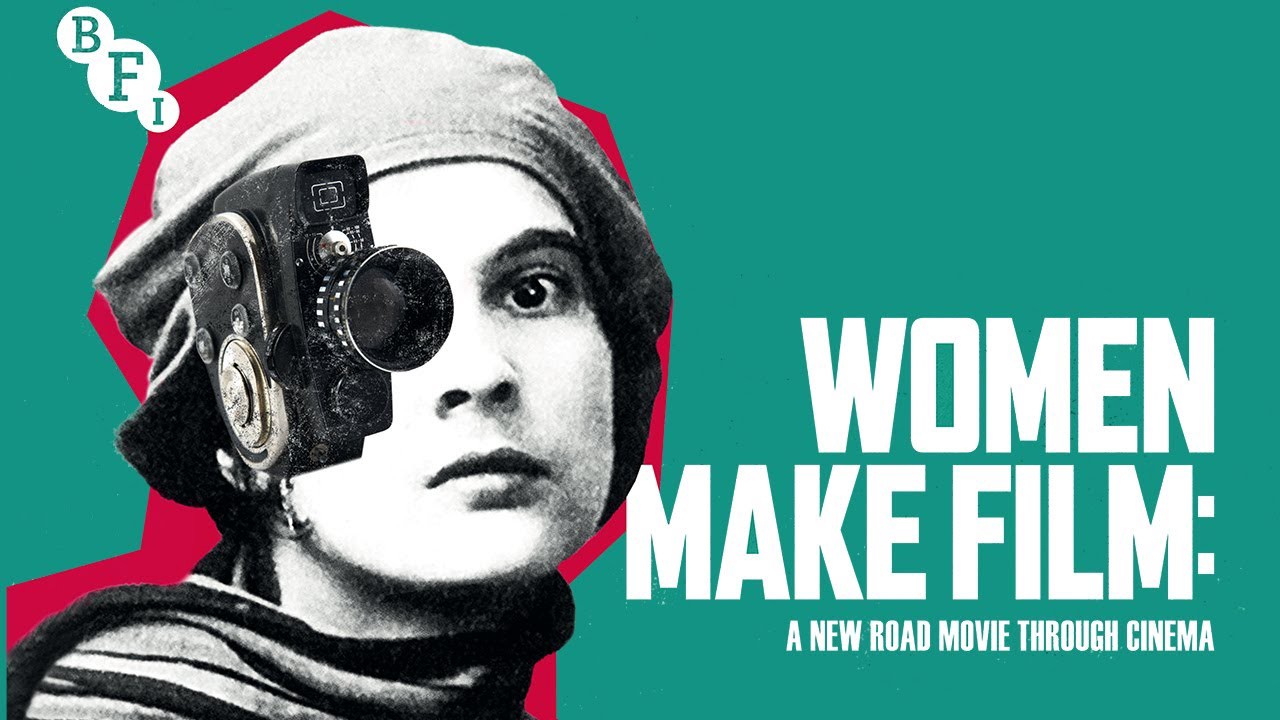
"Women Make Film" is a fourteen-hour documentary film from filmmaker and critic, Mark Cousins. This timely project is a celebration, placing a much needed spotlight on female filmmakers from around the world and throughout history, some that certainly have not received the recognition that they and their influential work deserve. With narration from a cast of international performers, Adjoa Andoh, Jane Fonda, Kerry Fox, Thandie Newton, Tilda Swinton, Sharmila Tagore and Debra Winger, this "road movie through cinema" is divided into forty chapters and features the work of one hundred and eighty-three directors. The director Cousins has not made a conventional doc, offering an introspective, almost academic, exploration on how their films are shaped and how they inventively depict love, life and death through the cinematic lens.
"Women Make Film" originally made it's premiere at the 2018 Venice Film Festival and is now being shown on Turner Classic Movies as one-hour episodes on Tuesdays beginning this month through December. TCM hosts, Alicia Malone and Jacqueline Stewart, will do the introduction before each showing and then will screen some of the films discussed in that installment on the channel. This is a wonderful opportunity to learn about some of the unsung talent of cinema and discover their extraordinary movies.
I always loved the work of Helmut Newton, a photographer who was best known for creating highly stylized images (often erotically charged, mostly of women) that transported us to fantastic worlds that allude to intriguing stories. Yet some viewed these same photos as offensive, disturbing and misogynistic. The documentary, "Helmut Newton: The Bad and The Beautiful" from director, Gero von Boehm, does touch on this dichotomy over the photographer and his transgressive vision but the film remains largely a celebratory affair of his life and career.
He was born Helmut Neustädter in 1920 to a wealthy family who owned a button factory in Berlin. But with the rise of fascism and the Nazi party, the Neustädters, who were Jewish, would end up losing their business and be forced to flee out of the country with the family settling in Argentina.
Newton developed an interest in photography as a child and would apprentice with Else Neuländer (a talented photographer who was known professionally as Yva) at twelve. She would become a great influence on the young Newton, introducing him to the commercial possibilities of photography. As Yva was also Jewish, her fate was not as fortunate as Newton's and would end up perishing in a concentration camp sometime during the war.
When he turned eighteen, Newton went off in to the world with his camera and arrived in Australia where he would meet another woman who would impact his career. June Browne, an actress and model, entered his life during a photo shoot and they married not long after that. She would become his muse, art director, editor, curator and even became a photographer herself, using the alias, "Alice Springs".
As his reputation grew as a fashion photographer, Newton's first major contract was with British Vogue and would soon go to work with all editions of Vogue, Harper's Bazaar and Playboy. Newton's fashion work was unusual at the time as he exclusively used black & white photography and increasingly pushed the boundaries of taste by creating pictorials that featured an assertive sexuality, fetishistic scenes and nudity. His models wore bold, dramatic make-up and almost always appeared expressionless, giving off an icy and aloof demeanor.
From previous interviews with the photographer in this film, Newton comes across as good-natured, playful and serene. This was in stark contrast to the dark, hard-edged, glacial glamour he would produce with many of his more memorable photos. Beautiful women were always the main focus and he even states that men were usually just background or accessories in his pictures. Watching footage of Newton at work, he was very precise in his approach, knowing exactly how he wanted the outcome of the image to be seen, no matter the brief discomfort of the model.
The director von Boehm, who has had an extensive career making documentaries in his native Germany, keeps the focus of "The Bad and The Beautiful" on the creation and enduring impact of Newton's craft. While the film does explore the photographer's childhood and family, there is no deep psychological evaluation of his life. Newton dismisses the idea that the vivid imagery of Nazi propaganda might have shaped his aesthetic or how the trauma of being Jewish during the war may have served as some inspiration to his art.
There is very little critical examination of Newton's photography in the film. The only moment we see is a clip from some French television talk show where Newton and writer, Susan Sontag are guests. Newton states that he loves women and defends his work as an appreciation to them. And as the feminist activist admits that he does seem like a perfectly nice man, she firmly believes that Newton's photos are derogatory and very harmful to women.
Some of the more famous faces who posed in front of Newton's camera are assembled to discuss their experiences. We have models, Nadja Auermann, Claudia Schiffer and performers, Isabella Rossellini, Grace Jones, Marianne Faithfull and Charlotte Rampling (who are all formidable personalities) reveal, in various ways, how they were well aware of the potential of sexism and exploitation while working with the photographer. Yet they all found Newton endearing and he made them feel very comfortable to do whatever he asked of them.
Newton had his first heart attack in 1970 which may have slowed him down but certainly did not count him out. He would eventually do less magazine work and devote more time on portraiture and fine art studies. The Newtons would spend the winter in Los Angeles, always staying at the Chateau Marmont, the famed hotel of the rich and fabulous on the Sunset Strip. It is believed that Newton had a heart attack while driving away from the hotel in 2004, crashing in to a wall and passing away at the age of eighty-three.
It doesn't seem likely that an editor of a fashion magazine would be brave enough to publish Newton's work today or that contemporary models and actresses would be willing to participate in such graphically sexual photo shoots. "Helmut Newton: The Bad and The Beautiful" is a rather conventional look at a wildly provocative artist. Yet the film successfully points out that Newton still remains a compelling influence in fashion, art and photography. People may not agree on whether he was a seductive saint or perverted sinner but the complicated responses to his work is one of the reasons why Newton continues to fascinate and excite.
Part family drama and part sci-fi thriller, "Fast Color", from co-writer and director, Julia Hart, is a quietly riveting, supernatural mystery with elements of super-hero adventure.
Gugu Mbatha-Raw plays Ruth, a young woman who has been on the run for some time, trying to avoid being captured by a nefarious organization. They want to study her due to the seizures that she has which releases an uncontrollable powerful energy that causes destructive seismic shifts. Ruth lives in a dystopian world that's dry and crumbling because it has not rained in years, making water a valuable commodity. Overwhelmed and exhausted, Ruth makes her way back to the remote farm where she grew-up to her mother (Lorraine Toussaint) and the daughter (Saniyya Sidney) she left behind with her. While back at home, she slowly reconnects with her loved ones and discovers that her special abilities have been a part of the women in her family for generations. But the relentless scientists are closing in with the help of a local sheriff (David Straithairn) who has secrets of his own.
The compelling storytelling, striking visual effects and graceful performances would be enough to make this film exceptionally appealing yet what makes "Fast Color" really stand out is that the central characters are African-American and female which is a move that is unexpected and enlightened for this genre. "Fast Color" was released modestly last year and this smart, thrilling adventure didn't receive all the attention it certainly deserves. This is a film that you should definitely seek out.
"Sisters" (1973)
One of the earliest of Brian DePalma's feature films is "Sisters", an overwrought psychological thriller which also serves as a low-wattage homage (or to some, blatant rip-off) to the acclaimed work of Alfred Hitchcock.
Loosely inspired by the true-life story of the conjoined Krivoshlyapova twins from the Soviet Union, ad salesman, Philip (Lisle Wilson) and French-Canadian model/actress, Danielle (Margot Kidder) meet while participating on a "Candid Camera" type game show in New York. He offers Danielle to be his date for his prize of dinner at a restaurant with the couple having a good time. As they continue the evening at her place in Staten Island, Danielle sees her former husband, Emil (William Finley) watching outside the apartment, realizing that he's been following them all night. Pretending to leave, with Emil departing not long afterwards, Philip sneaks back to Danielle so they can continue their date. The next morning, Philip awakens to hear arguing French-speaking voices. Danielle tells him that her twin sister, Dominique has arrived and it's their birthday. After returning from an errand to pick-up Danielle's prescription and a surprise birthday cake for the twins, Philip is brutally murdered by Dominique. Grace Collier (Jennifer Salt), a neighbor who lives in the building across the way, witnesses the murder (with remarkable detail considering her apartment doesn't look directly in to Danielle's) and calls the police. But when they arrive, a body is nowhere to be found. As a reporter for a small Staten Island newspaper and looking for a story to give her some notice, Grace is determined to investigate and solve this mysterious crime.
DePalma has never been known for well-constructed stories and the implausible holes in the plot here are miles wide. But what the director has been able to successfully achieve in much of his work is stylish production, thrilling suspense and first-rate performances, which can be found in this film. Voyeurism and feminism are prevalent themes in "Sisters" that the director has returned to many times in his films throughout his career, much like his cinematic idol. It's not clear if DePalma was attempting to make an earnest parody of Hitchcock or an actual horror film. In either case, neither idea was entirely successful. But that doesn't mean that "Sisters" is not entertaining, effectively delivering plenty of disturbing images, creepy scares and gruesome violence.
"Franca: Chaos and Creation" (2016)
This fascinating documentary, "Franca: Chaos and Creation" looks at the life of the late Editor-In-Chief of Vogue Italia, Franca Sozzani (who passed away at the age of sixty-six shortly after this film was completed) whose groundbreaking artistic vision completely transformed how fashion was presented in the pages of the magazine. Francesco Carrozzini, a noted fashion photographer, video director and the son of Sozzani, directed the documentary, with this project beginning as a way for him to find out more about his mother, who could be elusive and coy regarding her past and creative process.
Sozzani married young (which ended after three months) but knew she wanted more out of life than simply being a wife and mother. She soon turned to fashion yet it was what was happening in London at the time in the swinging '60's that captured her imagination instead of Italy which was fairly conservative during this era. Sozzani's first major job was as an assistant at the children's fashion magazine Vogue Bambini before taking over the Italian edition of Vogue in 1988. During her time at the magazine, Sozzani's editorial style was about creating mood and narrative through her fashion spreads by pushing the boundaries of the photography found on the glossy pages. Some of the more outrageous and controversial ideas to become fashion content included plastic surgery, domestic violence, mental illness, the BP oil spill and the most audacious; an entire issue devoted to the use of only black models.
With home-movie footage of Sozzani as a child and young woman, the colorfully chaotic images from many of the photo shoots and the big names of the fashion industry sharing stories of their collaboration and friendship with the editor, "Chaos and Creation" takes a candid look at an innovator who, for almost thirty years, boldly merged art, photography and fashion to create one of the most influential magazines in history.
While I anxiously await the time I can once again sit in a darkened theater to watch a film, here is another round of movies I have streamed while trapped indoors:
"Room at the Top" (1959)
"Room at the Top", a British drama by director, Jack Clayton adapted from the novel by John Braine, tells the story of Joe Lampton (Laurence Harvey), a young man from a factory town of Dufton, arriving in Warnley to begin an entry-level job in the Treasurer's Department. With a strong desire to quickly move his way up to acquire wealth and a better life, he sets his sights on Susan Brown (Heather Sears), the daughter of a successful local businessman who does not approve of Joe for his daughter. Joe begins an affair with an older married woman, Alice Aisgill (Simone Signoret) while still pursuing Susan. After falling hard for Alice, Joe realizes that love is all that truly matters. However there are a few complications that arise that will make this become impossible.
"Room at the Top" was one of the early films in the cinematic British New Wave when social realism began to appear on screen, centered on the arduous life of the working class. Yet I don't think time has not been particularly kind to this drama. As a contemporary viewer, the film feels stiff and overly theatrical. But the film was a box-office hit and highly praised in it's day, receiving six Academy Award nominations including Best Picture. Hermione Baddeley (who some of you might remember her as Mrs. Naugatuck on the TV comedy series, "Maude") with under three minutes of total screen time received a surprising yet deserved nod for Best Supporting Actress as a friend of Alice. "Room at the Top" won Oscars for it's screenplay and for Ms. Signoret as Best Actress. While I certainly understand the appeal of this French actress with her steely and sensual presence, I'm just not sure if this was the best female performance of that year when considering that Doris Day ("Pillow Talk"), Audrey Hepburn ("The Nun's Story"), Katharine Hepburn and Elizabeth Taylor (both for "Suddenly, Last Summer") were also in the running. And Mr. Harvey received a nomination for Best Actor for his work here which is far more problematic as his performance never convinces us that he was ever a working class bloke.
"The Kingmaker" (2019)
In "The Kingmaker", Imelda Marcos' warm remembrances of her time as the First Lady of the Philippines is in sharp contrast to the terrifying recollections of the many people who survived during the regime of her late husband, Ferdinand Marcos who ruled the country as President for twenty-one years before being deposed and forced into exile in 1986.
This compelling yet disquieting documentary by Lauren Greenfield features interviews with Mrs Marcos where she actively cultivates an image of herself where she was simply a loving and caring "mother" of the people who happened to like "nice things". But we are shown how her unquenchable desire for a lavish lifestyle, which included the purchase of luxury goods, real estate from across the globe and even displacing citizens so she could have a zoo of exotic animals roaming freely on an island, ultimately lead to the family stealing billions of the country's funds for their own personal use. We hear from people who suffered due to martial law enacted by President Marcos and the political rivals who helps overturn the corrupt government.
The film also follows Marcos as she's on the campaign trail for her only son, Ferdinand "Bongbong" Marcos Jr. as he runs for Vice-President of the Philippines. "The Kingmaker" reveals how this former First Lady boldly tries to use her persuasive charm to completely rewrite history in order to restore her family's image and reclaim their place of political power in the country.
"Flesh and the Devil" (1926)
I have to admit that I can probably count on one hand how many silent movies I have seen. I know for a film buff, that's kinda shameful but I'm going to try and change that. I had actually seen a segment on TCM about silent films and one that had caught my eye was "Flesh and the Devil" from director, Clarence Brown. What made me curious was the discussion on the stunning cinematography by William H. Daniels and the undeniable star power of Greta Garbo. While I was aware of the commanding presence she had in photographs but when Garbo is in motion on the screen, she is absolutely breathtaking. Unable to speak English when she arrived in America, the young Swedish actress was signed to M-G-M, given a makeover and with this, her third feature film, would become an international movie star.
This romantic melodrama is a not-so-subtle look at temptation and sin with John Gilbert (a major star at the time) as Leo von Harden and Lars Hanson as Ulrich von Eltz, two childhood friends now serving together in the German army. After Leo sets his eyes on the alluring Felicitas (Garbo), they begin a passionate affair. However, Felicitas neglected to tell Leo that she's married and when her husband, Count von Rhaden (Marc McDermott) catches them, he demands satisfaction. There is a duel; Felicitas becomes a widow and Leo (who claimed the duel was over a quarrel during a card game) is sent to Africa for five years by the military as punishment. And Leo unwisely asks his dear friend, Urlich (unaware of the affair) to watch over Felicitas while he is away.
Without sound, the performances had to be much broader and dramatic which can be distracting for modern audiences. But I was really captivated by this beautifully shot film, particularly by Garbo who was a master of seduction, using only her eyes to magnetically draw you in.
Where & When: Arclight Cinemas, Hollywood, CA. September 22, 2019 12:30 PM
At one point in the engaging documentary, "Linda Ronstadt: The Sound of My Voice", Bonnie Raitt describes the singer as the "Beyoncé of her day". And that would be an accurate assessment of this versatile song stylist. Linda Ronstadt ruled the pop charts throughout the 1970's which helped make her become one of the biggest female recording artists of all time. But while she was at the top of her career, Ronstadt grew tired of the grind of the rock & roll lifestyle and needed to challenge herself creatively. She ventured out to record albums that explored theatrical comic opera, the Great American Songbook, classic country, jazz standards, Mexican Mariachi and Tropical Latin music. Her record label thought for sure that Ronstadt would ruin her career by going so far outside of conventional expectations of a pop singer. Yet thankfully they didn't stop her either. And these records became critical and commercial successes, helping to introduce Ronstadt to a wide new audience.
Ronstadt was born in Tucson, Arizona in 1946 and raised on a large ranch with her parents and three siblings. As the family was fairly isolated, the children had to find their own entertainment and that would be with music. Ronstadt was exposed to a variety of different genres of music through records and the radio while the entire family would harmonize together in song. This would help later in her career influence how she wanted her music to sound and to insist on firm creative control to make sure that would happen.
Ronstadt began singing professionally with her older brother, Peter and sister, Suzy as teens around the Tucson area. The three Ronstadts eventually joined musician Bobby Kimmel's folk-rock outfit, The New Union Ramblers and together enjoyed some local success. But Peter left to become a police officer, Suzy went off to get married and Kimmel headed to Los Angeles which left Ronstadt on her own with no idea of what she wanted to do with her life.
Kimmel knew Ronstadt would do well in LA, luring the eighteen year old out to the West Coast in 1964. They formed a group called the Stone Poneys, signed with Capitol Records and had a top ten pop hit with "Different Drum" (written by Monkees member, Mike Nesmith) by 1967. The band broke-up not long after this success but the label was more interested in their female vocalist anyway.
And Ronstadt became an incredibly popular artist and enjoyed a string of hit singles (with most being covers of some of her favorite songs) including "You're No Good", "Blue Bayou", "When Will I Be Loved", "Heat Wave", "Love is a Rose", "Ooh Baby, Baby" and "It's So Easy". But being viewed as a "chick singer" was challenging for her as there were expectations to be sexy and tough which Ronstadt was not comfortable doing. Since she was one of the few women performing in rock music, Ronstadt had to occasionally endure sexist behavior and received some resistance from her all-male band members from her calling the shots. But she never let any of this interfere with her ability to do what she loved.
Ms Ronstadt had absolutely no interest in participating in a film about her life but the filmmakers, Epstein and Friedman were persistent, frequently sending her warm and thoughtful letters. The now retired seventy-three year old performer eventually relented, in part due to their 1984 Academy-Award winning documentary on Harvey Milk which Ronstadt admired and made her feel like she would be in good hands. Yet she still had a couple of ground rules; Ronstadt didn't want to have an on-camera interview nor did she want the film to dwell on her Parkinson's disease which she has been dealing with since around 2009.
"The Sound of My Voice" covers a vast majority of Ronstadt's lengthy life and career but the film moves briskly. The highlight of this documentary, without a doubt, are the several thrilling live performances from Ronstadt in her prime which perfectly capture her skill and grace as a vocalist. Some of Ronstadt's musical contemporaries appear in the film to sing her praises which include Jackson Browne, Ry Cooder, J.D. Souther (which she had a brief relationship with), Aaron Neville and Don Henley who was at one time a part of a group of Ronstadt's backing musicians that would eventually become The Eagles.
Ronstadt never felt any competition with the other talented female performers who were around at the time and went out of her way to befriend them. Raitt and Karla Bonoff would become her life-long friends while she collaborated with Emmylou Harris and Dolly Parton on two highly successful country albums. The only criticism you will find about Ronstadt in the film is from the singer herself. She's notoriously self-deprecating, continuously going on about how she's not a great singer and that many of her recordings are not very good.
While she found her great fame during the era of the singer/songwriter, Ronstadt did not write her own material. "The Sound of My Voice" brings to focus her unique ability to reinterpret beloved, familiar tunes while reshaping them to feel like fresh new songs. Near the end of the film, we are treated with Ronstadt singing along with her brother and nephew to a traditional Mexican folk ballad. While the disease has robbed her of the powerful voice she once had, Ronstadt gives her all, looking elated and stating that there was no way she wouldn't join her family in song.
Where & When: Los Feliz 3, Los Angeles, CA. May 7, 2019 1:30 PM
At the start of "Be Natural: The Untold Story of Alice Guy-Blaché", Pamela B. Green's fascinating documentary, various people who work in the film industry are asked if they had ever heard of Alice Guy-Blaché. Almost none of them had (director Ava DuVernay was the exception) and after discovering her important contributions to early cinema, they were shocked and dismayed that they were not aware of Ms Guy-Blaché. With narration by Jodie Foster, Ms Green reveals all of the amazing accomplishments of this French film making pioneer and tries to unravel the mystery of exactly why her name had faded in to obscurity.
Following the death of her father in 1891, an eighteen-year old Alice Guy trained to become a typist and stenographer to help her widowed mother. She was hired as a secretary by Felix-Max Richard who owned a photography supply company. A few years later, Richard had to sell the company and it went to the team of Gustave Eiffel (yes, the man who designed the Eiffel Tower and the Statue of Liberty), Joseph Vallot, Alfred Besnier, and Léon Gaumont, which the company was renamed after. Moving pictures was just beginning and Gaumont and Co. would become a major player in the creation and distribution of film in France.
While Alice was still working as a secretary for the company, she would become familiar with production, marketing and camera lenses. The films being made at the time were largely for experimental purposes and promotion to sell camera equipment. After seeing Louis Lumière's forty-six second documentary, "Workers Leaving The Lumière Factory in Lyon" in 1895 (and is considered one of the first motion pictures ever made), Guy was convinced she could bring story-telling elements to film.
With Gaumont's permission, Alice made her first film, "La Fée aux Choux (The Fairy of the Cabbages)" in 1896 which was based on a classic French fairy tale in which baby boys are born in cabbages. She would become the studio's head of production and made hundreds of short films that included melodramas, dance, comedies and westerns. By 1906, Guy wrote and directed a big-budget feature, "The Life of Christ" which featured hundreds of extras and made use for the first time of special effects like double exposure and running the film backwards.
Alice would marry Herbert Blaché in 1907 and they headed to America where he would become the production manager for Gaumont's operations in New York. But three years later, the couple and their business partner, George A. Magie would form their own movie studio, The Solax Company. The studio became successful and invested in a large state-of-the-art new studio in Fort Lee, New Jersey. This is where Guy-Blaché placed a large sign that stated, "Be Natural" which was to serve as a reminder for her actors to keep their performances down to Earth.
You can see Ms Green's extensive background in creating movie main-title designs and motion graphics in her feature documentary debut with several clever animated charts and sequences in "Be Natural". She had first learned about Ms Guy-Blaché in a television documentary on trailblazing women in film back in 2000 and has worked ever since in bringing awareness to this early director's life and career. As one of the very few female filmmakers, Guy-Blaché took on some very uncommon subjects in cinema at the time involving race, gender politics, feminism, immigration and spousal abuse. She made a 1906 comedy short, "The Consequences of Feminism" which focuses on men and women swapping their societal roles and "A Fool and His Money", which was made in 1912 and is widely considered to be the first feature film with an entire African-American cast.
History has done a great disservice to Alice Guy-Blaché in regards to her rightful place in the invention of our modern cinema. Due to a changing movie-business and blatant sexism, her career was tragically cut short. Guy-Blaché, who died at the age of ninety-four in 1968, made her last feature in 1919 and was never able to make another film. With the exceptional "Be Natural", Ms Green tries to rectify this omission with her detailed documentary which showcases the extraordinary talent and inventive spirit of one of the most important female artists in cinema.
Where & When: Arclight Cinemas, Hollywood, CA. April 6, 2019 8:15 PM
"Amazing Grace", the transcendent and transformative visual document of the live recording of Aretha Franklin's first gospel album, has been unearthed, restored and finally released over forty-six years after it was initially made. The story behind why it had been shelved all this time is as fascinating as the film itself.
Ms Franklin, at this point at the age of twenty-nine, had become one of the biggest soul singers in the world and crossed over to find equal success in pop music while selling millions of records in the process. During this time, she had covered all genres of music but had never made an actual gospel record. As she had honed her skills as a vocalist since she was a child as part of the choir at the New Bethel Baptist Church in Detroit, MI. where her father, the Rev. C. L. Franklin was minister, it seemed like something well overdue.
With her long-time producers, Jerry Wexler and Arif Mardin, Franklin decided to record the album live at the New Temple Missionary Baptist Church in Los Angeles. She had been interested in getting in to the movies and wanted to film the recording as an theatrical concert event for Warner Bros. Sydney Pollack, a rising director at the time who had been Oscar-nominated for his work in the 1969 depression-era drama, "They Shoot Horses, Don't They?", was selected to direct the project.
It's really incomprehensible how it could happen on a professional movie shoot yet none of the footage had been properly marked before filming so the sound and picture were not in sync. Unable to use anything that had been shot, there was no choice but to shelve the film where it sat tragically in a vault for years. Alan Elliott, a producer, had heard about this legendary Aretha Franklin film and desperately wanted to try and salvage it. Shortly before his death in 2008, Pollack gave the footage to Elliott and he worked on it for two years before finally being able to complete the documentary feature.
The original plan was for "Amazing Grace" to be released in 2011 but Ms Franklin strongly objected and sued to prevent the film from being shown. After Franklin's contract with Warner Bros. had been found, Elliott once again tried to release the film in 2015 where he had plans to have it first shown at the Telluride, Toronto, and Chicago International Film Festivals. However, Franklin lawyered-up again and was granted an emergency injunction which effectively cancelled the highly anticipated screenings.
Shortly after Ms Franklin's passing in August of last year, Elliott approached her family and was allowed to screen the film for them. They were thrilled with it and "Amazing Grace" finally premiered at the Doc NYC Fest on November 12, 2018. We will never know why Ms Franklin was so set against "Amazing Grace" being shown and I don't believe she ever saw the completed film but she had absolutely nothing to fear. This film beautifully captures the Queen of Soul at the peak of her astonishing power and Mr. Elliott really should be commended for seeing this wonderful project through despite all of the many obstacles he faced.
Shot over two days beginning on January 13, 1972, Franklin had her childhood friend, Rev. James Cleveland and the Southern California Community Choir participate on the album. The church is surprisingly sparsely filled on the first night but Rev. Cleveland gives instructions to the attendees to make sure they are seen and heard for this special recording before introducing the guest of honor. Ms Franklin emerges, regal in a sparkling white gown, and takes to the piano to perform Marvin Gaye's "Wholy Holy". This is just the beginning of several stirring songs of praise which is capped off by an soul-shaking rendition of the title hymn. While Mr. Pollack may have handled the filming of this recording incompetently, he did know where to place his cameras. He expertly captures all of the varied reactions from the choir and the audience, with many visibly moved, as Franklin performs throughout, particularly as she roars through "Amazing Grace".
I guess word must have spread about the first night because on the second evening, it was standing room only in the church. It even captured the attention of a couple of Rolling Stones as Mick Jagger and Charlie Watts are seen sitting among the faithful. Ms. Franklin's father, Rev. C.L. Franklin is also present along with the great gospel artist, Clara Ward who was a family friend and mentor to a young Aretha. Rev. Cleveland has her father offer a few words to the audience about his daughter where he expresses how proud he is and briefly shares stories of how he watched her develop her talent.
The structure of documentary feature films has been altered significantly since "Amazing Grace" was originally conceived. It's not really a documentary in the current sense of the word as there are no interviews, no dramatic arc trying to be formed and the only time Ms Franklin is heard throughout the film is when she is singing. And it's not actually a concert film as it's more in line with a church service than people going to a show to be entertained. But "Amazing Grace" perfectly captures a once-in-a-lifetime moment that appeared to be lost forever of a remarkable talent musically reconnecting to her spiritual roots while subtly blending this with the sounds of her secular success.
Throughout her entire career, Aretha Franklin never lost sight of who she was and where she came from and "Amazing Grace" reveals this in no uncertain terms. I have always been a huge fan of the Queen and this film made me love and miss her her even more. This cinematic treasure serves as a miraculous testament to her outstanding gift as a vocalist and innate ability to stimulate and excite an audience simply through the sheer power of her voice.
Where & When: Nuart Theatre, West Los Angeles, CA. September 19, 2018 7:30 PM
The name Hal Ashby may not mean much to many people today but if you’ve seen "Shampoo", "Harold and Maude", "The Last Detail" or "Being There", then you are more familiar with him than you might think. This brilliant uncompromising filmmaker is the subject of "Hal", a documentary by Amy Scott, which examines his part in the New Hollywood revolution of the 1970’s, an era that completely overhauled the types of American movies that were being made.
These young, experimental filmmakers (like Scorsese, Malick, Coppola and DePalma to name just a few) abandoned the glossy, artificial style that had best defined Hollywood films, shifting towards gritty realism, location shooting and oblique narrative structures to tell their stories. Many of these films involved adult themes that featured drug use, course language, graphic violence and nudity. The work of Mr. Ashby pushed the limits of cinema, focusing on challenging and controversial subject-matter like race relations, intergenerational romance, sexual politics and the struggles of Vietnam War veterans, and while most of these were dark comedies, they still concerned many of the studios he worked with. But audiences responded to his films, sometimes quite favorably, other times with indifference, and they have remained timely and have greatly influenced the next generation of filmmakers.
Born in Utah and raised in a Mormon household, Ashby's childhood was filled with difficult emotional trauma and he did not embrace the religion. After making his way to Los Angeles not long after the demise of his first marriage, he quickly takes to the hippie scene of the time. Ashby stumbled in to Hollywood film editing, assisting while learning the craft until he edited his first feature on his own, the 1965 comedy, "The Loved One".
He met Norman Jewison, a rising director at the time, and they bonded, becoming life-long friends. He hired Ashby to edit his 1966 film, "The Russians Are Coming, The Russians Are Coming" and went on to receive his first Academy Award nomination for Best Film Editing. These buddies teamed up again for "In The Heat of The Night", a drama about a black police detective (played by Sidney Poitier) who travels to a small Mississippi town to investigate a murder. The film became a box-office smash and went on to win five Academy Awards including Best Picture and Best Film Editing for Ashby.
Feeling like he was more than ready, Jewison encouraged Ashby to get behind the camera. His debut feature was "The Landlord", an offbeat comedy about racial tension due to gentrification in Park Slope, Brooklyn. The film was not a major success but received plenty of critical acclaim and earned co-star, Lee Grant an Oscar nomination. This was an auspicious start for Ashby and helped emboldened him as a filmmaker.
Ms Scott has not only assembled some of the people who worked with Mr Ashby (which includes Mr. Jewison, Jane Fonda, Jon Voight, Jeff and Beau Bridges and Ms Grant, who won an Oscar for her role in "Shampoo") to share their experiences but she has a few modern filmmakers with indie roots like David O. Russell, Lisa Cholodenko, Allison Anders and Alexander Payne to discuss how his films helped shape and influence their own work.
Since his method of creating cinema was all consuming for Ashby that meant that the people in his personal life suffered in the process. He was married five times and had many girlfriends in between yet his rascally charm made them enjoy their time with him until they realized that his true and complete devotion was to his films.
Much of his film output by the 1980’s became more unfocused and far less memorable. Ashby would shoot an excessive amount of footage and relied heavily on improv. Some say that his increased drug usage was the cause while others dismissed this idea and attributed his behavior to his resistance to the increased studio interference of his creative vision.
Ashby was supposed to direct “Tootsie” (and we see early test footage with Dustin Hoffman) but because he refused to complete post-production on "Lookin' To Get Out" after the studio took control of the 1982 film, he was taken off the project. It’s curious to imagine what Ashby’s version of "Tootsie" would have ended up like yet I’m certain this comedy about a difficult male actor pretending to be a woman to get work would not have not been as safe and feel-good under his direction (with no offense to the film's ultimate director, Sydney Pollack).
Candid and insightful, "Hal" brings in to focus a ballsy artist who had something to say with his films and was unafraid to make his provocative ideas known. Mr. Ashby's work may have had themes that were boldly political and socially conscious yet he also managed to entertain. He was the type of maverick filmmaker that really doesn't exist anymore and that is truly a shame.
Where & When: Los Feliz 3, Los Angeles, CA. June 29. 2018 7:20 PM
I admit I was never a fan of "Mister Rogers' Neighborhood". Even as a child, I found the program silly and corny with the host to be a bit of an oddball character. Now with the help of this wondrous documentary by Morgan Neville, "Won't You Be My Neighbor?", I have a better understanding of who Fred Rogers was and a greater appreciation of what he was trying to accomplish with his children's program.
The title of this film comes from the song Mr. Rogers would sing at the start of every episode as he would get comfortable by changing from his jacket and shoes to a cozy sweater and sneakers before starting the show. While "Mister Rogers' Neighborhood" offered children an opportunity to escape in to delightful fun and fantasy, Mr. Rogers also wanted them to receive lessons about loving themselves, being kind and polite to others, coping with childhood fears and a subdued insight on the complicated adult world around them.
Born and raised as a solid mid-westerner in Latrobe, Pennsylvania, Rogers had planned to join a seminary to become a minister. And while briefly accomplishing that goal, he became distracted by a relatively new medium; television. Rogers instinctively understood the potential of this technology and while what little he had seen left him underwhelmed, he knew what he could accomplish by somehow becoming involved with it.
Using footage of interviews he had given throughout his lifetime, Rogers explains how he first worked for a local children's program in Pittsburgh, learning to develop characters, puppets and music before being offered to create his own show by the Canadian Broadcasting Corporation in 1963. After a few years, Rogers went back to Pittsburgh and with PBS began "Mister Rogers' Neighborhood" and the show was on the air for thirty-two years.
Most of Morgan Neville's feature documentaries have focused on important figures in the music industry. Rolling Stones founder, Keith Richards, country legend, Johnny Cash, punk legends, Iggy & the Stooges, cellist, Yo-Yo Ma (who also makes a brief appearance in this doc), James Taylor and Carole King's early years performing at the L.A. club, Troubabour and the unsung heroes of the music biz; the background singers ("20 Feet from Stardom" won Neville an Oscar back in 2013) are just some of the veterans that the director trained his camera on.
Rogers, who leaned to play the piano as a child and wrote many of the songs on his program, did effectively use music to convey complex emotions to children in a way they could understand. Neville has occasionally strayed from the subject of music with the last time being "Best of Enemies" in 2015 which detailed the epic political battle by two intellectuals; Gore Vidal and William Buckley. With "Won't You Be My Neighbor", he focuses on Rogers' fierce determination to make adults understand that education doesn't only involve books. It also needed to involve developing their social and emotional needs. One great example of Rogers using his voice to enact positive change is displayed during a 1969 Senate hearing over funding of PBS amid discussions of budget cuts. He spoke before chairman, John O. Pastore, an impatient, no-nonsense Senator, and after giving an impassioned, unscripted speech, Pastore was visibly moved, essentially approving the funding at that moment.
Throughout the many conversations with people who either knew, worked with or loved him, no one had a single negative word to say about Rogers. He did not smoke, drink or curse, became a vegetarian later in life and swam religiously every morning before starting his day. With an endless goal in trying to help others, Fred Rogers comes across as a really nice guy on and off camera. Almost too good to be true. Yet perhaps that says more about what's going on in our society today. With a world filled with so much turmoil, hostility and cruelty, it's hard to imagine many successful and celebrated figures attempting to use their gifts and resources to improve our condition with respect, graciousness and good humor. Oprah comes quickly to mind but not too many follow.
I must say I was surprised by my reaction to “Won’t You Be My Neighbor?” as I found myself either teary-eyed or openly weeping throughout almost the entire film. I guess I was really moved by Rogers' warmth, generosity and tolerance to everyone he came in to contact with. And I guess I may also be saddened by this seemingly conscious lack of charitable spirit in today's volatile climate. The film serves as a reminder of how far we have strayed from civility and how basic compassion is still within our grasp.
Where & When: Los Feliz 3 Cinemas, Los Angeles, CA. May 13, 2018 4:15 PM
After beginning her career as a model back in the '70's, Grace Jones went on to become a celebrated singer and actor, all on her own terms. She is far from a conventional figure. Despite an intimidating masculine presence, Jones is certainly all woman; soft, gentle and even flirtatious when so desired. With such a confident and striking personality, any documentary about her should have resulted with an effortlessly fascinating experience.
Yet with “Grace Jones: Bloodlight and Bami” ("bloodlight" is a word that her long-time producers, Sly and Robbie coined for the red light that comes on when recording is about to begin while "bami" is a Jamaican bread), director Sophie Fiennes (and yes, she is related to English actors, Ralph and Joseph) has managed to present this powerful performer in a way that feels slight and ordinary. The film keeps to the surface, never lingering too long on any particular moment and doesn't get far enough beneath the colorful facade of Jones.
This documentary was filmed almost a decade ago during the recording of "Hurricane", which was her first album at the time in ten years which she self-produced and features many autobiographical songs. This is tied to a trip back to her home country of Jamaica with her son, Paulo to visit family and reconnect to the island she left when she was a young girl to move to upstate New York.
At seventy years old, Jones remains a marvelous eccentric as we watch her engaging in such activities as precariously shucking her own oysters, wearing a colorful shirt as a head wrap during a recording session or drinking champagne first thing in the morning in nothing but a fur coat. She speaks in a deep voice that mingles her native Jamaican patois with French and British English accents that adds to her mysterious allure.
There have been plenty of stories of her outrageous behavior throughout her varied career but you will find little mention of it here. Some events are brought up only in passing conversation like the time she slapped a talk show host for apparently ignoring her yet we are not given any backstory to this or any other incidents that have occurred in Ms Jones' life. Ms Fiennes has decided to simply observe the icon, offering no talking heads, voice-over or detailed introduction of the people we meet circling her orbit. Even a brief history lesson would have certainly benefited those who may not have even been born during the height of her renown.
It’s clear the director didn’t want to be intrusive and tried to help her subject feel more comfortable by using minimal lighting and inconspicuous sound recording. But there are too many underlit scenes (which is an unfortunate situation for people with darker skin tones) and muddy sound during the Jamaica trip that make many of the poignant moments there less than effective. The choppy editing by Ms Fiennes causes the film to meander with all the flourishes of a film school project.
However, the well-shot concert footage saves the day in helping bring the film to life. With the aide of extravagantly inventive hats by famed milliner, Philip Treacy, Ms Jones is in her element captivating an audience with her intense, otherworldly performances during the tour to promote her album.
A singular and provocative artist, Grace Jones has had a life filled with bold creativity and wild abandon. With "Bloodlight and Bami", the film celebrates the dynamic legend while attempting to reveal the unvarnished side of the woman from the Caribbean. But we ultimately end up with plenty of Ms. Jones, the entertainer and far less of Ms. Jones, the individual.