The Library of Congress has finally revealed their selections of the twenty-five movies added this year to the National Film Registry. Usually announced in December, which recognizes their artistic significance while helping to ensure their preservation for generations to come. These films, which must be at least ten years old, have been named because of their cultural, historic or aesthetic importance and with these selections brings the number of films in the registry to 925.
Some of the films selected include an animated adventure involving a family of super-heroes from Pixar, "The Incredibles"; two musicals that starred Bing Crosby, the holiday classic, "White Christmas" and "High Society", the musical remake of "The Philadelphia Story" with songs by Cole Porter and co-stars, Frank Sinatra and Grace Kelly; "The Big Chill", the comedy-drama about the reunion of college friends after the death of a classmate brings them together; an early silent film with an all-black cast, "Ten Nights in a Barroom"; two films that featured Denzel Washington: the Civil War drama, "Glory" which earned the actor his first Academy Award and "Philadelphia" which teamed him with Tom Hanks in a legal drama about an attorney suing his former law firm for discrimination over firing him for being a gay man with HIV; Amy Heckerling's quintessential coming-of-age comedy, "Clueless", loosely based on Jane Austen's novel, "Emma"; "Sparrows", a silent drama that starred one of the first movie stars, Mary Pickford that had become even more powerful at this point by moving into producing her films and "Inception", Christopher Nolan's twisty, sci-fi thriller that featured an all-star cast lead by Leonardo DiCaprio.
Turner Classic Movies will screen a selection of these inductees on March 19th with TCM host and film historian, Jacqueline Stewart, who also happens to be chair of the National Film Preservation Board, will introduce the films.
Here is the complete list of the recent entries into the 2025 National Film Registry:
"The Tramp and the Dog" (1896)
"The Oath of the Sword" (1914)
"The Maid of McMillan" (1916)
"The Lady" (1925)
"Sparrows" (1926)
"Ten Nights in a Barroom" (1926)
"White Christmas" (1954)
"High Society" (1956)
"Brooklyn Bridge" (1981)
"Say Amen, Somebody" (1982)
"The Thing" (1982)
"The Big Chill" (1983)
"The Karate Kid" (1984)
"Glory" (1989)
"Philadelphia" (1993)
"Before Sunrise" (1995)
"Clueless" (1995)
"The Truman Show" (1998)
"Frida" (2002)
"The Hours" (2002)
"The Incredibles" (2004)
"The Wrecking Crew" (2008)
"Inception" (2010)
"The Loving Story" (2011)
"The Grand Budapest Hotel" (2014)
Showing posts with label Turner Classic Movies. Show all posts
Showing posts with label Turner Classic Movies. Show all posts
Friday, January 30, 2026

Saturday, October 25, 2025
MY VIEWING DIARY: PART SIXTEEN

After winning the 1945 Best Actress Academy Award for her turn as the harried mother in "Mildred Pierce", Joan Crawford's stagnant career was fully revitalized. One of the films she made following her win was "Daisy Kenyon", a melodramatic love triangle, that was daring at the time due to its more pragmatic handling of these complicated emotional affairs. The director, Otto Preminger was responsible for pushing as far he could go in this torrid story with the Motion Picture Production Code. Years later, the infamously temperamental filmmaker would aggressively go even further in handling banned subjects in his movies, effectively helping to bring an end to the long imposed censorship in American cinema.
Set in New York City shortly after the end of WWII, Crawford plays Kenyon, a commercial artist who is having an affair with Dan O'Mara (Dana Andrews), a smooth-talking, married lawyer. Fed up with waiting around for him and the empty promises of divorcing his wife (Ruth Warrick), Daisy informs Dan she has made other plans for dinner. As he's leaving her home, Dan runs into Daisy's new suitor, a war veteran widower named Peter Lapham (Henry Fonda). While Peter still grieves for his wife and Daisy is not over Dan, these two wind up getting married. After discovering her husband's affair with Daisy, she wants to file for divorce with full custody of their children. Dan asks Peter and Daisy to allow him to reveal the details of his former relationship with Daisy during the divorce trial. This request affects her marriage to Peter and the trial publicly damages her reputation.
Not well received at the time of its initial release, "Daisy Kenyon" has been reevaluated by modern audiences, giving the film a newfound respect. Neither Andrews or Fonda really cared for the script yet fulfilled their contractual obligations, still providing solid performances. But this is actually Crawford's opportunity to deliver a star turn with plenty of her usual hard-boiled flair and monumental emoting. She had wanted to buy the rights years before but was beat out by 20th Century Fox and campaigned hard to get to play the lead. Considering the restrictions of the era, Preminger managed to make "Daisy Kenyon" feel modern with credible characters reacting to challenging love situations believably and honestly.

"Dead Man" is Jim Jarmusch's version of a western; a dark, trippy and surreal adventure involving a meek, soft-spoken man who ends up becoming a wanted, gun-toting outlaw. Johnny Depp plays William Blake who we meet on a train heading west to the frontier town of Machine from Cleveland. Selling everything he owns to get there for an accounting position he had been promised at the Dickinson metal shop, Blake discovers there is no job available with the owner (Robert Mitchum in his final film role) showing him to the door at gunpoint. Broke and homeless, the mild mannered Blake encounters Thel (Mili Avital), a lovely former working girl now making a living selling paper flowers, and offers him to stay with her for the night. But they are interrupted by Charlie (Gabriel Byrne), her former lover, who is not thrilled with this situation. Bullets soon fly across the room ending with Thel murdered by Charlie and (in self-defense) Blake shoots him dead. As Charlie happens to be the son of Dickinson, the distraught businessman sets a bounty out on Blake, wanted dead or alive, and hires a posse of outlaws (Lance Henriksen, Michael Wincott and Eugene Byrd) to track him down. On the run, a wounded Blake encounters a Native American named Nobody (Gary Farmer) who helps heal him and believes he's the reincarnation of the English poet, William Blake.
The filmmaker has no interest in the deeply embedded, nonsense found in many Hollywood westerns where most white men were the virtuous heroes while the Native Americans are nothing more than blood-thirsty primitives. In "Dead Man", the Natives are presented as humane and enlightened with the pale faces appear unpredictably crazed and dangerous. And since this is a Jarmusch film, this quirky western features offbeat comedic moments, unhurried pacing and sudden bursts of bloody violence. Shot in crisp black & white by cinematographer, Robby Müller and with a rousing original musical score by rocker, Neil Young, "Dead Man" is far from top-notch Jarmusch. Yet the film still manages to engage with an eccentric sense of style and unsettling mood.

I had avoided for years watching "Marty", the story of a lonely butcher seeking love and companionship, despite the film winning the Palme d'Or at the Cannes Film Festival and the Oscar for Best Picture back in 1955 (one of only four films that managed to accomplish this feat). Despite all the acclaim I remained hesitant, feeling like it would be nothing more than an overwrought melodrama. But I recently gave in and finally watched "Marty". Now I must admit I made a huge misjudgment about this film. With a poignant screenplay by Paddy Chayefsky (another Oscar winner) and some outstanding naturalistic performances, "Marty" is a well-crafted and expressive small-scale drama filled with grand, complex human emotions.
Working as a butcher in the Bronx, Marty Piletti (Ernest Borgnine) is continuously scolded by the nosy neighborhood women that he should be ashamed for not settling down and getting married. But it's not like he hasn't tried meeting a nice girl. Tending to be shy and socially awkward, this makes dating very difficult for Marty. With his brothers and sisters already off and married, Marty is still living at home with their mother (Esther Minciotti) who worries about her son. One evening, with Marty at home and no plans on going out, Teresa pushes him to go dancing.
Reluctantly, Marty heads out to a dancehall with his also-single, best friend, Angie (Joe Mantell) with the hope they might meet some women. Marty runs in to Clara, (Betsy Blair) a high school teacher crying after being dumped by her blind date. They spend the evening together talking with these two lonely people making a deep emotional connection. But his friend and mother, feeling Clara is not good enough for him, both encourage him to move on and keep looking for a more suitable mate. Marty is left with a struggle between following his heart or listening to people he thinks knows what's best for him.
"Marty" began as a teleplay in 1953 during the early days of television with Rod Steiger playing the title role. For the film, Chayefsky expanded the script and after Steiger declined to take part, Borgnine took over playing Marty, going on to win the Academy Award for Best Actor and become a movie star. Borgnine and Blair have a lovely chemistry as two people, isolated and assuming they're unattractive, helping each other to feel less alone and desirable. After directing hundreds of hours of live television, Delbert Mann got his first opportunity to direct a feature film with "Marty". Having only sixteen days to shoot and a very low budget, Mann used his experience to craft an economical yet substantial drama and would receive the Best Director Oscar for his efforts. Please don't make my mistake: "Marty" is a beautifully moving film filled with absorbing passion and unfortunate heartbreak that should be sought out and seen.
Wednesday, April 3, 2024
THIRTY YEARS OF TURNER CLASSIC MOVIES

On April 14, 1994, the basic cable channel, Turner Classic Movies made its premiere, showing films from the golden age of Hollywood uncut and commercial-free. Since then, TCM has expanded upon its goal to celebrate and preserve classic cinema: starting a film festival (now in its fifteenth year), holding an annual Young Composers Film Competition which offers the winner an opportunity to score a restored, feature-length silent film as a grand prize, teaming up with Julien's Auctions to sell Hollywood memorabilia and creating a wine club with movie-themed bottles to be paired with a favorite film.
All this month, TCM will be celebrating with a special theme, The Beginning of a Beautiful Friendship. Every Thursday in April, each film of the evening will be programmed by a former employee of TCM who will share stories about what these films mean to them and of their time working at the channel. There will also be screenings of many past interviews with the stars of the Golden Age, vintage promos and several film introductions by TCM's original host, the late Robert Osborne.
What I think is probably the most remarkable about this celebration is how Turner Classic Movies has managed to continue its mission completely intact over the past three decades despite the changes of ownership and management during this time which created potential threats to the format and even the continuing existence of the channel. Here's hoping for many more years of TCM exactly like it has been done for the last thirty.
Please click below to see TCM's April schedule:
TCM Monthly Schedule
Wednesday, January 10, 2024
COLUMBIA STUDIOS @ 100

Today marks the centennial of Columbia Studios who went from a scrappy indie to one of the major players in Hollywood. The studio began as a small production and distribution company run by brothers, Harry and Jack Cohn and their friend, Joe Brandt in 1918. They first called their studio CBC Film Sales Corporation but seven year later changed the name to Columbia Pictures.
They never had their own lot until a year later, purchasing two sound stages near the corner of Sunset Blvd. and Gower. The studio couldn't really afford contract players, usually borrowing actors from other studios, but they did sign on a few and creating stars in the process. This included Cary Grant, Jean Arthur, Ann Sothern, Glenn Ford and Rita Hayworth. And in order to save more money, Columbia did not operate their own theater chain, unlike most of the other studios at the time. However, this would later prove to be an even greater financial benefit for Columbia after the government cracked down on monopolies and forced the studios to sell off their theaters.
Brandt soon grew tired of dealing with the mercurial Cohn brothers and sold his shares of the company to them in 1932. Columbia Pictures would remain a minor player in Hollywood for a while until Frank Capra entered as a director. Arriving in 1927, he came in and pushed the Cohns to spend more money on scripts and budgets. This would eventually pay off in 1934 when Capra's romantic comedy, "It Happened One Night" became a box-office smash and swept the Oscars, winning all of the top five major awards (Best Picture, Best Director, Best Actor, Best Actress and Best Adapted Screenplay) for the first time. Other hits by Capra for the studio included "Lost Horizon", "You Can't Take It with You", "Mr. Deeds Goes to Town" and "Mr. Smith Goes to Washington". Columbia would produce or distribute other popular movies like "His Girl Friday", "From Here to Eternity", "On the Waterfront", "Born Yesterday", "The Bridge on the River Kwai", "A Man for All Seasons", "Funny Girl" and "Oliver!".
Jack Cohn died in 1956 and his brother, Harry passed away two years later. Without clear leadership, Columbia Studios struggled with their movies throughout the 1960's with the studio going through a severe creative and financial downturn. They were able to hold on barely with the assistance of their successful Screen Gems divisions of television and music. But by the 1970's, Columbia was nearly bankrupt, forced to sell some of their studio property and formed a partnership with Warner Bros. to utilize that studio's lot in Burbank.
After a series of owners and numerous studio heads, Columbia Pictures was acquired by electronics giant, Sony in 1989. This was a merger that would prove to be very successful and make Columbia a lucrative movie studio for the new owners. Some of the noteworthy films released through the studio include "Philadelphia", "Men in Black", "Crouching Tiger, Hidden Dragon", "Boyz n the Hood", "The Fifth Element" "The Social Network" and "Spider-Man".
Turner Classic Movies will honor the legacy of Columbia Pictures on the channel by screening twenty-six of the studio's most popular and influential films throughout the month of January. The 1933 pre-code rom-com, "Man's Castle" with Spencer Tracy and Loretta Young; "The Awful Truth", a Cary Grant and Irene Dunne comedy classic; the movie that made Rita Hayworth a star, "Gilda"; the Best Picture Oscar winner by David Lean, "Lawrence of Arabia" which introduced to the world, Peter O'Toole; Martin Scorsese's controversial thriller, "Taxi Driver"; One of Steven Spielberg's early hits, "Close Encounters of the Third Kind"; two bio-pics that are Best Picture winners, "Gandhi" from 1982 and "The Last Emperor" from 1987; Sofia Coppola's second feature as a director, "Marie Antoinette" and Nancy Meyers' romantic-comedy for adults, "Something's Gotta Give" with Jack Nicholson and Diane Keaton are just some of the films that will be featured on TCM.
Thursday, January 4, 2024
THE POWER OF FILM

For those fans of cinema who are interested in understanding how and why we respond to certain films, Turner Classic Movies is presenting a new 6-part series, "The Power of Film", beginning on January 4th and continuing through the next five Thursdays.
Based on the book by Howard Suber, a UCLA film professor and created by documentary filmmakers, Doug Pray and Laura Gabbert, "The Power of Film" explores the cultural and emotional impact film provides for audiences, utilizing footage from acclaimed and beloved movies to illustrate examples of the extraordinary power of cinema. Professor Suber, who co-wrote the series, will share his thoughts throughout the series, discussing film as an art form from a historical and critical aspect and pointing out filmmakers, since the very beginning of the motion picture industry, who have used their skills at storytelling to share their own personal and political viewpoints to the world in order to possibly influence a cultural shift in our society.
Dave Karger will host the series, joined by Pray and Gabbert, and after each new episode, TCM will program some of the memorable films discussed in the series in order to perhaps look at them in a new way and to better understand why they have continued to endure.
Tuesday, April 4, 2023
WARNER BROTHERS @ 100

The fabled movie studio, Warner Bros. will be celebrating one hundred years of creating motion pictures this year. Still located in Burbank, CA, this dream factory has been behind some of the greatest works of cinema since the birth of the commercial motion picture industry. The studio would later expand into music and television with even further success.
Founded in New Castle, PA by brothers Harry, Albert, Sam, and Jack L. Warner as Warner Features Company, their first motion picture release was "the Peril of the Plains" in 1912. They soon headed west by 1915 and the brothers had their first major box office hit with "My Four Years in Germany" three years later.
On April 4, 1923, Warner Bros. Pictures was officially established as a motion picture studio. Their very first movie star was a dog: a trained German shepherd named Rin Tin Tin who went on to appear in a series of popular movies, twenty-seven in all, becoming an international sensation. But the studio would find their greatest success by taking a chance on a new innovation: sound. With "The Jazz Singer" in 1927, Al Jolson was "heard" actually singing in sync in the musical-drama which this box-office smash effectively helped bring an end to silent movies and "the talkies" went on to revolutionize the industry. Sadly, Sam Warner passed away suddenly the day before this film's premiere on October 5th from pneumonia caused by sinusitis.
The surviving brothers would carry on, leading Warner Bros. to become one of the most successful and highly influential of the movie studios. Since their early days, the studio produced a broad range of movie styles ranging from backstage musicals, gangster flicks, swashbucklers, and women's pictures. Some of these now classic films include "The Public Enemy", "Casablanca", "The Maltese Falcon", "Dark Victory", "A Streetcar Named Desire", "My Fair Lady", "Bonnie and Clyde", "Blazing Saddles", "A Clockwork Orange", "The Exorcist", "Unforgiven", "The Matrix" and the "Looney Tunes" series of cartoon shorts.
But Jack would have serious conflicts with his brothers and by 1956 he had secretly purchased their shares in the business after convincing them to participate in a joint sale of stocks, gaining full control of the studio. He would continue to run the studio with an iron fist before retiring from the studio in 1969. The studio would soon be sold to investment companies a few times and merged with others over the following years, currently part of AT&T and now known as Warner Bros. Discovery.

And during the month of April, Turner Classic Movies will be honoring this legendary movie studio by screening some of the movies made throughout their storied history with programming highlights that will include pre-code classics, gangster films, Busby Berkeley musicals and their star-contract players. TCM will also showcase ten newly restored films in partnership with Martin Scorsese's The Film Foundation that will feature "The Strawberry Blonde"(1941), "East of Eden"(1955), "Rio Grande"(1959) and "Rachel, Rachel"(1969).

And during the month of April, Turner Classic Movies will be honoring this legendary movie studio by screening some of the movies made throughout their storied history with programming highlights that will include pre-code classics, gangster films, Busby Berkeley musicals and their star-contract players. TCM will also showcase ten newly restored films in partnership with Martin Scorsese's The Film Foundation that will feature "The Strawberry Blonde"(1941), "East of Eden"(1955), "Rio Grande"(1959) and "Rachel, Rachel"(1969).
Sunday, October 31, 2021
MY VIEWING DIARY: PART FIFTEEN
"Camille" (1936)
 The latest movie I've seen starring Greta Garbo is "Camille", considered one of her greatest screen performances and helping the actress earn the second of her three Academy Award nominations. This elegantly grand, period romance about a doomed lady of pleasure and the man who loves her unconditionally until the end was inspired by 1848 novel, "La Dame aux Camélias" by Alexandre Dumas. George Cukor directs Garbo for the first time here, helping to draw out her buried levity, before working with the Swedish actress again in the comedy, "Two-Faced Woman" which would be her final film before retiring in 1941.
Set in 19th century Paris, Garbo plays Marguerite Gautier, a lovely courtesan with expensive tastes. Yet she lacks financial savvy, requiring her to rely on the kindness of wealthy gentlemen to help pay her mounting debts. One night at the theater, Marguerite's confidant, Prudence Duvernoy (Laura Hope Crews) arranges for her to get acquainted with Baron de Varville (Henry Daniell), a man of wealth and prestige who could help Marguerite with her money woes. But she briefly mistakes the handsome, Armand Duval (Robert Taylor) for the Baron. Sparks fly between these two and while the young man is from a financially comfortable family, Armand lacks the serious funds needed to keep Marguerite comfortable. But over time, he falls hard for the enchanting beauty, something she has never experienced before from a man. This conflict causes Marguerite, who is seriously ill with consumption, to struggle between fiscal comfort from the Baron and romantic passion from Armand.
The Garbo in "Camille" is far removed from the early Garbo in the silent film era. After years in Hollywood, the usually somber actress appears effortlessly relaxed on screen, more warm and carefree than many of her previous appearances. The producer, Irving Thalberg (who died at thirty-seven shortly after filming was completed) had the writers re-work the script to cater to the strengths of the actress after seeing rushes of a radiant Garbo. He was also responsible for insisting on giving this stunning, period-costume drama a contemporary feel with Cukor using his reliable skills to make a lively and captivating spectacle despite the dark undercurrents of the story.
"Walk on the Wild Side" (1962)
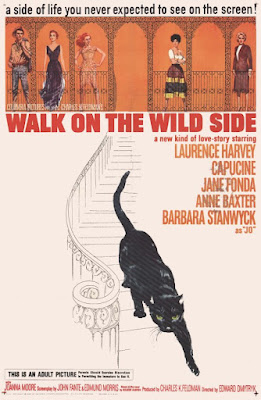 Opening with a sensational credit sequence directed by Saul Bass featuring a black tom cat prowling the city streets before starting a fight a with a sleek white cat, "Walk on the Wild Side", Edward Dmytryk's demented, Southern-fried soap-opera, is about all-consuming obsession and long-simmering desires. Set during the Depression era, Laurence Harvey plays Dove Linkhorn, a handsome drifter traveling around in search of Hallie Gerard (Capucine), a French woman he had a brief, passionate affair. When he last heard from her, she was in New Orleans yet has no real idea where she might be. While stopping in Texas, he comes across Kitty Twist (Jane Fonda), an attractive fellow drifter who uses what she has to survive. They decide to head to Louisiana together and while Kitty has eyes for Dove, his focus remains on finding Hallie. He discovers that she's working at the Doll House, a brothel in the French Quarter run by the tough madam, Jo (Barbara Stanwyck). Dove is determined to save Hallie from this depraved life but Jo is also determined to keep her, equally obsessed with this Gallic beauty and willing to destroy anyone who stands in her way.
"A Rainy Day In New York" (2019)
 After being unhappy with the film made from his screenplay for "What's New, Pussycat?", Woody Allen (who began his career writing for television in the '50's before moving to stand-up comedy and playwriting in the '60's) vowed to direct his own work. He directed his first feature, "What's Up, Tiger Lily?" in 1966, a strange comedy he made from an existing Japanese spy film by overdubbing the dialogue and rearranging the order of scenes. Allen made a series of popular slapstick comedies before he shifted to the dramatic romantic-comedy, "Annie Hall" in 1977, a box-office hit that won four Academy Awards including Best Picture. His subsequent work would vary wildly from sublime ("Manhattan"; "Hannah and Her Sisters"; "Bullets Over Broadway"; "Blue Jasmine") to substandard ("Shadows and Fog"; "The Curse of the Jade Scorpion"; "Anything Else"; "To Rome with Love"). "A Rainy Day In New York", Allen's forty-seventh feature film as a writer/director, fails as one of the filmmaker's weaker efforts. This poorly conceived romantic-comedy is supposed to contemporary yet Allen has the characters speak and behave in a manner that comes across as oddly dated, feeling far better suited for a story set eighty years ago.
Gatsby Welles (Timothée Chalamet), a college student from a wealthy New York family who loves '40's jazz, drinks at the Carlyle and quotes Cole Porter, is dating Ashleigh Enright (Elle Fanning) who attends school in Arizona to study journalism. When she is given an assignment to travel to New York to interview the acclaimed filmmaker, Roland Pollard (Liev Schreiber), Gatsby decides to surprise her with a romantic weekend in the city. But Pollard is so impressed by Ashleigh's skills and knowledge that he invites her to a private screening of his latest film, forcing Gatsby to rearrange his plans. With time on his hands, Gatsby wanders the streets and stumbles on to a movie set where the director happens to be a friend and the star, Chan Tyrell (Selena Gomez) is the younger sister of a former girlfriend. And due to an actor not showing up, Gatsby is asked to fill in for a romantic scene in the film with Chan. Meanwhile at the screening, Ashleigh meets the handsome, movie star, Francisco Vega (Diego Luna) who invites her out for dinner after being enchanted by the student reporter. What follows are a series of contrived mishaps and illogical decisions that puts a strain on this young couple's relationship, leading to a conclusion that's more dark and off-putting than charming and sweet.
"A Rainy Day In New York" seems like a old script that Allen found in the back of a drawer, blew some of the dust off and went to work filming. And while the actors manage to deliver some fine performances (with brief appearances by Jude Law, Rebecca Hall, Annaleigh Ashford and Cherry Jones) and the camerawork by Vittorio Storaro is quite captivating, the rest of this dreary film does not have a moment that hasn't been reconstructed or recycled from any number of Allen's previous (and far superior) comedies.
At this point in his career, the now eighty-five year old Allen is just viewed as a troublesome relic from the past. His reputation has been shattered by some disturbing allegations from almost thirty years ago even though he has never been charged with a crime. But even before the scandal, Allen was never known to be a warm or gregarious figure and let's not even get in to the story of how he meet his current wife. I have no intention on making any judgement on his character here but to share my thoughts on the filmmaker's latest feature film and "A Rainy Day In New York", with it's lame jokes and out-of-touch premise, is simply lazy and predictable. This is especially disheartening as Allen has proven he is a capable creator of thoughtful, funny and charming movies yet now just grinding out tired retreads from his glory days.

Set in 19th century Paris, Garbo plays Marguerite Gautier, a lovely courtesan with expensive tastes. Yet she lacks financial savvy, requiring her to rely on the kindness of wealthy gentlemen to help pay her mounting debts. One night at the theater, Marguerite's confidant, Prudence Duvernoy (Laura Hope Crews) arranges for her to get acquainted with Baron de Varville (Henry Daniell), a man of wealth and prestige who could help Marguerite with her money woes. But she briefly mistakes the handsome, Armand Duval (Robert Taylor) for the Baron. Sparks fly between these two and while the young man is from a financially comfortable family, Armand lacks the serious funds needed to keep Marguerite comfortable. But over time, he falls hard for the enchanting beauty, something she has never experienced before from a man. This conflict causes Marguerite, who is seriously ill with consumption, to struggle between fiscal comfort from the Baron and romantic passion from Armand.
The Garbo in "Camille" is far removed from the early Garbo in the silent film era. After years in Hollywood, the usually somber actress appears effortlessly relaxed on screen, more warm and carefree than many of her previous appearances. The producer, Irving Thalberg (who died at thirty-seven shortly after filming was completed) had the writers re-work the script to cater to the strengths of the actress after seeing rushes of a radiant Garbo. He was also responsible for insisting on giving this stunning, period-costume drama a contemporary feel with Cukor using his reliable skills to make a lively and captivating spectacle despite the dark undercurrents of the story.
"Walk on the Wild Side" (1962)

One of the more distracting problems with "Walk on the Wild Side" (based on a 1956 novel by Nelson Algren) is that it's unable to be clear and direct on the more salacious moments going on in the story due to the self-censorship imposed by the Hays Code. While films coming out of Europe at this time had begun dealing with adult themes with honesty and realism, American movies were still trapped doing a sanitized version of real life. In this film, prostitution is never mentioned, making one wonder what these ladies were really doing in this house and the relationship between Hallie and Jo is left purposely vague even though it's quite clear they are more than "just close friends'.
With the help of a dazzling cast of actors, this swampy melodrama is made a little more interesting. Harvey is just adequate in the role of Dove yet fails to generate much of a real connection with any of his female co-stars. This was Fonda's second film role and already displaying a great screen presence but still had some work to do being fully convincing as a character down-on-their-luck and desperate. The great Anne Baxter makes a problematic appearance as Teresina Vidaverri, the owner of New Orleans café that helps Dove with a job and shelter, a character who is clearly supposed to Mexican and the actress uses an accent to drive it home. And the screen legend Stanwyck is always a wonderful addition to any film, able to make even silly dialogue crackle with intensity. On the other end, Capucine, with the skills of a classic model-turned-actress, struggles to deliver a competent performance, far too stiff to make us believe that Hallie is an alluring and irresistible siren. Restrained by the times, "Walk on the Wild Side" can't really let loose to tell a story that actually feels wild and dangerous.
"A Rainy Day In New York" (2019)

Gatsby Welles (Timothée Chalamet), a college student from a wealthy New York family who loves '40's jazz, drinks at the Carlyle and quotes Cole Porter, is dating Ashleigh Enright (Elle Fanning) who attends school in Arizona to study journalism. When she is given an assignment to travel to New York to interview the acclaimed filmmaker, Roland Pollard (Liev Schreiber), Gatsby decides to surprise her with a romantic weekend in the city. But Pollard is so impressed by Ashleigh's skills and knowledge that he invites her to a private screening of his latest film, forcing Gatsby to rearrange his plans. With time on his hands, Gatsby wanders the streets and stumbles on to a movie set where the director happens to be a friend and the star, Chan Tyrell (Selena Gomez) is the younger sister of a former girlfriend. And due to an actor not showing up, Gatsby is asked to fill in for a romantic scene in the film with Chan. Meanwhile at the screening, Ashleigh meets the handsome, movie star, Francisco Vega (Diego Luna) who invites her out for dinner after being enchanted by the student reporter. What follows are a series of contrived mishaps and illogical decisions that puts a strain on this young couple's relationship, leading to a conclusion that's more dark and off-putting than charming and sweet.
"A Rainy Day In New York" seems like a old script that Allen found in the back of a drawer, blew some of the dust off and went to work filming. And while the actors manage to deliver some fine performances (with brief appearances by Jude Law, Rebecca Hall, Annaleigh Ashford and Cherry Jones) and the camerawork by Vittorio Storaro is quite captivating, the rest of this dreary film does not have a moment that hasn't been reconstructed or recycled from any number of Allen's previous (and far superior) comedies.
At this point in his career, the now eighty-five year old Allen is just viewed as a troublesome relic from the past. His reputation has been shattered by some disturbing allegations from almost thirty years ago even though he has never been charged with a crime. But even before the scandal, Allen was never known to be a warm or gregarious figure and let's not even get in to the story of how he meet his current wife. I have no intention on making any judgement on his character here but to share my thoughts on the filmmaker's latest feature film and "A Rainy Day In New York", with it's lame jokes and out-of-touch premise, is simply lazy and predictable. This is especially disheartening as Allen has proven he is a capable creator of thoughtful, funny and charming movies yet now just grinding out tired retreads from his glory days.
Monday, May 17, 2021
MY VIEWING DIARY: PART THIRTEEN
"A Little Romance" (1979)

Lauren (Diane Lane in her first screen appearance) is a precocious thirteen year old American living in Paris with her frivolous mother (Sally Kellerman) and her latest husband, a banker (Arthur Hill). While on the set of her mother's newest infatuation, an obnoxious film director (David Dukes), Lauren meets Daniel (Thelonious Bernard in his only film role), a young French boy obsessed with Hollywood movies, who snuck on to the movie shoot. And just like in the movies, the two teens quickly fall for each other.
One day, Lauren and Daniel literally bump in to Julius Santorin (a hammy Laurence Olivier), an elderly, aristocratic gentleman. He befriends them, sharing many fantastical stories including one where if lovers kiss in a Venetian gondola beneath the Bridge of Sighs at sunset while the church bells toll, they will be forever in love. And after a disastrous meeting with Lauren's mother at a party, with her forbidding her daughter to ever see Daniel again, and announcing plans to return back to America, the young lovebirds set off to Venice with the help of Julius.
Hill does capture the wonderous feeling of first love, the magical excitement of cinema and takes full advantage of highlighting the charm and beauty of two of the most romantic cities in Europe. But the real question remains; who is this movie for? "A Little Romance" is a little too stuffy and cultured for children to enjoy while adults won't really find much to connect with in this featherweight romance.
"Roxanne Roxanne" (2017)

Marley Marl (Kevin Phillips), who is a record producer, is working on a song with Roxanne that was inspired by the rap group, U.T.F.O's hit single, "Roxanne, Roxanne". They came up with a response track called, "Roxanne's Revenge" that becomes an immediate sensation and made the young teenager a star. And as Roxanne achieves some level of success as a musician, she is surrounded by men who cheat and exploit her including Cross (Mahershala Ali), a drug dealer who becomes her lover, father of her child and emotional tormenter.
With his second feature film, writer/director, Michael Larnell shows great promise as a filmmaker, creating a sharply observed, character-driven drama of a teen emerging from poverty and abuse to fortuitously become a musician. But the music takes a backseat to the hardships and challenges in Shante's life. We do get to witness the strength, fierce determination, survival skills and (briefly) rapping talent of this young woman yet by the conclusion, it feels like the film was far more interested in Shante's harrowing journey of victimization than her contributions to hip-hop.
"Girlfriends" (1978)

Melanie Mayron (who would later go on to greater acclaim appearing on the groundbreaking television drama, "thirtysomething") plays Susan Weinblatt, an aspiring photographer who wants to see her work displayed in galleries. But at the moment, she supports herself by shooting pictures for weddings and bar mitzvahs. And while her best friend and roommate, Anne (Anita Skinner) is trying to become a writer, she suddenly decides to marry her boyfriend (Bob Balaban), leaving her career aspirations and Susan behind. Trying to be happy for her yet disappointed with the decision, Susan goes on with her plans alone. As she struggles to sell her photos, Susan has a flirtation with a married Rabbi (Eli Wallach) and later gets a boyfriend (Christopher Guest). And as Anne (who has had a child) watches Susan make things happen with her life, she becomes envious of her friend's independence.
Weill began "Girlfriends" as a short in 1975, later getting some funding from the National Endowment for the Arts to expand it in to a feature. But she ran out of money and Weil had to find additional investors, making it take three years to finally complete the film. Warm, funny and engaging, Weill pointedly examines modern women and the complicated struggles in their lives, careers, relationships with men and other women that feels emotionally authentic.
Warners Bros. would distribute this low-budget indie, making the filmmaker an intriguing new talent. Her next effort was 1980's "It's My Turn", a romantic-comedy starring Jill Clayburgh and Michael Douglas, that was a critical and box-office disappointment, effectively bringing an end to her promising feature film career. Weill did find plenty of work later directing for television but it is shameful that Hollywood refused to give her another opportunity like they had given to numerous men that failed commercially after having a lauded film.
Tuesday, January 12, 2021
MY VIEWING DIARY: PART TWELVE
"Beauty and the Beast (La Belle et la Bête)" (1946)
 "Beauty and the Beast", from French director, Jean Cocteau, is far removed from the beloved Disney animated musical film most people are largely familiar with. Cocteau, who was better known as a writer and artist before turning to filmmaking, has crafted an enchanting yet dark visual masterpiece, a charming romance heightened with surrealist artistry. This first filmed version of the 1757 fairy tale by Jeanne-Marie Leprince de Beaumont tells the story of Belle (Josette Day) who cares for her family as they struggle financially due to Father (Marcel André) losing much of their wealth to the sinking of his cargo ships. Her horribly snobish sisters, Adélaïde (Nane Germon) and Félicie (Mila Parély) are not much help, putting on airs and treating Belle like a servant. But their situation is looking up as Father has another financial opportunity coming in from the sea. And because of this impending fortune, Belle's brother, Ludovic (Michel Auclair) gambles away what's left of the family's property.
When the ship comes in, however, there is nothing left after Father's debts have been paid. Forced to return home empty-handed, he becomes lost in the forest, coming across a seemingly empty castle with gates and doors opening magically by themselves. A loud roar frightens him but before he leaves, plucks a rose for his beloved daughter, Belle. The Beast (Jean Marais), a creature that is half-man and half-animal, suddenly appears, condemning Father to death for theft. But he will be spared only if one of his daughters takes his place.
When he returns home, Father explains the tragic events that has occurred to his family. Against his wishes, Belle decides to takes her father's place, returning to The Beast's castle. She is frightened and horrified by his appearance yet over time is captivated by his gentle soul. The Beast falls deeply in love with Belle, asking her to marry him but she refuses.
Many fairy tales were originally pretty morbid stories, filled with gore, brutality and dismemberment. But these tales were altered slightly over time through various cultures to make them simpler and easier for children to digest. This story sticks closer to the more commonly retold version by Beaumont but Cocteau has added his own bold dream-like elements to this tale. With spare dialogue, the director beautifully captures the wonderment of a classic romantic fantasy yet a sinister undercurrent is always near the surface. Actors are used as moving statues and candelabras for stunning impact, inventively pushing the boundaries of visual effects of the day. The look of The Beast is quite impressively elaborate, with claws, long teeth and moving ears, requiring many long hours for the costume to be applied to Marais (who also plays Belle's suitor, Avenant). If you are seeking an extraordinary magical experience, this "Beauty and The Beast" should not be missed.
"The Poseidon Adventure" (1972)

Set on New Year's Eve, the S.S. Poseidon is in route to Athens and we meet some of our key passengers. Reverend Scott (Gene Hackman), a minister who questions his faith; a long-time married couple (Jack Albertson and Shelley Winters) who are going on to Israel to meet their first grandchild; a gruff police detective (Ernest Borgnine) and his wife (Stella Stevens), a former prostitute; a teenager (Pamela Sue Martin) and her younger brother (Eric Shea) who are going to join their parents; a health-conscious retailer (Red Buttons) on board looking for love and the singer (Carol Lynley) of the ship's band. An earthquake has set off a tsunami and the Captain (played by Leslie Nielsen who I still have a hard time taking seriously due to his role in the disaster-movie spoof, "Airplane") is unable to move the ship out of the path of a massive wave. After the Poseidon capsizes and floating upside-down, Reverend Scott tries to persuade the survivors to move up to the hull. Only a small number agree to go with him and with an injured waiter (Roddy McDowall), they begin their dangerous journey in an attempt to be rescued.
The less said about the formulaic script by Stirling Silliphant and Wendell Mayes the better. Yet despite this setback, these gifted actors are still able to deliver moving performances that make us care about these characters with Ms Winters even earning a Best Supporting Actress Oscar nomination. But let's be real; "The Poseidon Adventure" is all about the tension-filled adventure, enhanced by impressive visual effects. And these special effects (which would win a Special Achievement Academy Award since visual effects were not a regular category at the time) have held up very well, especially since they had to be created on set.
"The Bride Wore Black (La Mariée était en noir)" (1968)
 Two of the most important figures in French cinema, the filmmaker, François Truffaut and actress, Jeanne Moreau re-team for the stylish, revenge thriller, "The Bride Wore Black", the first time since their 1962 international sensation, "Jules et Jim". Moreau plays Julie Kohler, a distraught woman who sadly became a widow on her wedding day. After telling her mother she's going on a long trip, Julie actually has other plans. The next time we see her, she is dressed glamorously in white and looking for a man named Bliss (Claude Rich). He's a notorious womanizer yet plans to get married. Julie appears at his engagement party and Bliss can't resist this beautiful woman staring at him. Luring him alone out to the balcony, Julie reveals her name to him before pushing him off of his high rise building. Bliss was one of five men responsible for the death of her husband and she plans on tracking each one down, making them pay with their lives. The other hunted men are played by some first-rate French actors, Michel Bouquet, Michel Lonsdale, Daniel Boulanger and Charles Denner.
While there are plenty of holes in the plot, Truffaut has made an entertaining film; an intense and thrilling ride that successfully bridges French cinematic sensibilities and Hitchcockian intrigue. But it is Moreau who elevates this material with her graceful and self-assured performance. The actress, who made her name for her work in Louis Malle's, "Elevator to the Gallows", Michelangelo Antonioni's "La Notte" and Luis Buñuel's "Diary of a Chambermaid" (to name just a few), is force of nature, coolly and methodically taking down each man who has deeply wronged her, never reconsidering her task for one moment. Watching this film did make me think of Quentin Tarantino's action-thriller, "Kill Bill" which shares some similar plot points right down to the Bride carrying a little book with the names of her potential victims which she crosses off once she's completed her mission. And while I know there were many movies that inspired him in the creation of "Bill", Tarantino claims to have never seen "The Bride Wore Black" and it's just a coincidence (which I find seriously hard to believe).

When the ship comes in, however, there is nothing left after Father's debts have been paid. Forced to return home empty-handed, he becomes lost in the forest, coming across a seemingly empty castle with gates and doors opening magically by themselves. A loud roar frightens him but before he leaves, plucks a rose for his beloved daughter, Belle. The Beast (Jean Marais), a creature that is half-man and half-animal, suddenly appears, condemning Father to death for theft. But he will be spared only if one of his daughters takes his place.
When he returns home, Father explains the tragic events that has occurred to his family. Against his wishes, Belle decides to takes her father's place, returning to The Beast's castle. She is frightened and horrified by his appearance yet over time is captivated by his gentle soul. The Beast falls deeply in love with Belle, asking her to marry him but she refuses.
Many fairy tales were originally pretty morbid stories, filled with gore, brutality and dismemberment. But these tales were altered slightly over time through various cultures to make them simpler and easier for children to digest. This story sticks closer to the more commonly retold version by Beaumont but Cocteau has added his own bold dream-like elements to this tale. With spare dialogue, the director beautifully captures the wonderment of a classic romantic fantasy yet a sinister undercurrent is always near the surface. Actors are used as moving statues and candelabras for stunning impact, inventively pushing the boundaries of visual effects of the day. The look of The Beast is quite impressively elaborate, with claws, long teeth and moving ears, requiring many long hours for the costume to be applied to Marais (who also plays Belle's suitor, Avenant). If you are seeking an extraordinary magical experience, this "Beauty and The Beast" should not be missed.
"The Poseidon Adventure" (1972)

I recently re-watched, "The Poseidon Adventure" for the first time since I was a ten year-old kid when it was originally released in theaters. And the story of a luxury ocean liner that is overturned by a giant tsunami with some of the surviving passengers trying to reach the top of the flipped-over ship still managed to really stress me out. This action-thriller, directed by Ronald Neame and produced by Irwin Allen, was one of the early all-star disaster films that were popular in the 1970's where we would see movies involving a massive LA earthquake, damaged airplanes, a flame-engulfed skyscraper, bombs on rollercoasters and a swarm of killer bees.
Set on New Year's Eve, the S.S. Poseidon is in route to Athens and we meet some of our key passengers. Reverend Scott (Gene Hackman), a minister who questions his faith; a long-time married couple (Jack Albertson and Shelley Winters) who are going on to Israel to meet their first grandchild; a gruff police detective (Ernest Borgnine) and his wife (Stella Stevens), a former prostitute; a teenager (Pamela Sue Martin) and her younger brother (Eric Shea) who are going to join their parents; a health-conscious retailer (Red Buttons) on board looking for love and the singer (Carol Lynley) of the ship's band. An earthquake has set off a tsunami and the Captain (played by Leslie Nielsen who I still have a hard time taking seriously due to his role in the disaster-movie spoof, "Airplane") is unable to move the ship out of the path of a massive wave. After the Poseidon capsizes and floating upside-down, Reverend Scott tries to persuade the survivors to move up to the hull. Only a small number agree to go with him and with an injured waiter (Roddy McDowall), they begin their dangerous journey in an attempt to be rescued.
The less said about the formulaic script by Stirling Silliphant and Wendell Mayes the better. Yet despite this setback, these gifted actors are still able to deliver moving performances that make us care about these characters with Ms Winters even earning a Best Supporting Actress Oscar nomination. But let's be real; "The Poseidon Adventure" is all about the tension-filled adventure, enhanced by impressive visual effects. And these special effects (which would win a Special Achievement Academy Award since visual effects were not a regular category at the time) have held up very well, especially since they had to be created on set.
"The Bride Wore Black (La Mariée était en noir)" (1968)

While there are plenty of holes in the plot, Truffaut has made an entertaining film; an intense and thrilling ride that successfully bridges French cinematic sensibilities and Hitchcockian intrigue. But it is Moreau who elevates this material with her graceful and self-assured performance. The actress, who made her name for her work in Louis Malle's, "Elevator to the Gallows", Michelangelo Antonioni's "La Notte" and Luis Buñuel's "Diary of a Chambermaid" (to name just a few), is force of nature, coolly and methodically taking down each man who has deeply wronged her, never reconsidering her task for one moment. Watching this film did make me think of Quentin Tarantino's action-thriller, "Kill Bill" which shares some similar plot points right down to the Bride carrying a little book with the names of her potential victims which she crosses off once she's completed her mission. And while I know there were many movies that inspired him in the creation of "Bill", Tarantino claims to have never seen "The Bride Wore Black" and it's just a coincidence (which I find seriously hard to believe).
Sunday, December 13, 2020
MY VIEWING DIARY: PART ELEVEN
"My Brilliant Career" (1979)
 One of the highlights during the Australian cinematic New Wave, "My Brilliant Career" was the feature film debut of Gillian Armstrong which also introduced to the world the amazing talents of Sam Neill and Judy Davis. Set in 19th century Australia, our story follows Sybylla (Davis), a young woman living on an isolated country farm with her family. Headstrong and chafing against the societal conventions on how women are expected to act, she dreams of having a career in the arts, possibly as a writer. Sybylla's exasperated parents decide to send her off to live with her wealthy grandmother (Aileen Britton) in the city with the hopes she will learn how to behave like a proper, upstanding young woman and get married. But that does not happen, in fact Sybylla becomes to feel even stronger in her convictions as a nonconformist. Sybylla captures the attention of two men; Frank Hawdon (Robert Grubb), a local sheep rancher who she has no romantic interest in and a wealthy family friend, Harry Beecham (Neill) that she finds herself becoming enamored with. But Sybylla is soon torn between following her amorous heart or pursuing a desire to follow her own path in life.
Based on a novel by Miles Franklin, "My Brilliant Career" was a perfect vehicle to showcase the filmmaking gifts of Ms Armstrong. The director's first film is an assured effort, told with great passion and heartfelt emotions. As she would further display in her future work in "Starstruck", "Mrs. Soffel" and the 1994 version of "Little Women", Armstrong's career would focus almost entirely on female protagonists, telling the little-told and much-needed narratives of women who refused to bend easily to tradition, determined to find their own voices and demanding for them to be heard. And with only her second film at the time, Ms Davis displays a commanding screen presence, capturing the fiercely independent yet deeply vulnerable spirit of a young woman who dared to question the limitations society had placed upon her solely because of her gender.
"The Bride Wore Red" (1937)
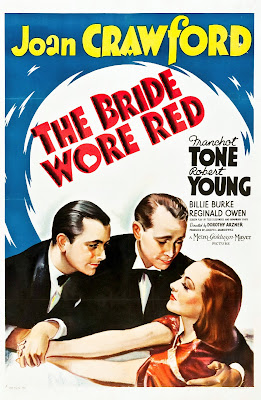 "The Bride Wore Red" is a routine 1930's Hollywood romantic-comedy that's only notable for marking the beginning of Joan Crawford's period of decline as a movie star (eventually being labeled "box-office poison") and being directed by the only woman working behind the camera during this era, Dorothy Arzner. Crawford plays Anni Pavlovitch, a singer at a sleazy nightclub in Trieste. She gets caught up in the amusement of a cynical Count Armalia (George Zucco) as he wants to prove a point to his friend, Rudi Pal (Robert Young who would later become better known on the television shows, "Father Knows Best" and "Marcus Welby, M.D."). With the belief that the only difference between the wealthy and the poor is a lot of luck, the Count arranges for Anni to spend two weeks living the good life at a glamourous resort hotel in the Alps. Posing as "Anne Vivaldi", a friend of the Count and daughter of an aristocrat, Anni takes quickly to the comforts of the rich. Rudi, unaware of this arrangement, sees "Anne" and becomes completely infatuated by her, despite being at the resort with his fiancée, Maddalena (Lynne Carver) and her parents (Reginald Owen, Billie Burke). But this soon turns in to a love triangle as a local postal clerk (Franchot Tone, Crawford's then-husband) also falls hard for Anni following their meeting during her arrival. Not wanting to give up this life of wealth and luxury, Anni struggles between snaring a rich yet unavailable man for security or following her heart for a man of more modest means.
 Bloody, gruesome and totally bonkers, "The Perfection" is a psychological thriller from co-writer and director, Richard Shepard that is filled with unexpected twists and insane turns. Charlotte Willmore (Allison Williams) is a gifted teenage cellist attending the prestigious music school, Bachoff in Boston. Her future looked promising but after her mother becomes gravely ill, she's forced to leave the academy. Years later, Charlotte is invited by Anton (Steven Weber), the director of Bachoff, to attend the selection of a new student in Shanghai. She meets Anton's current prize student, Lizzie (Logan Browning, star of the Netflix series, "Dear White People") and there is an instant connection between them. And their connection is so intense that after an evening of drinking and dancing, the ladies end up in bed together. This is where I should probably stop in order not to spoil what happens next as the story soars to histrionic and unhinged heights.

Based on a novel by Miles Franklin, "My Brilliant Career" was a perfect vehicle to showcase the filmmaking gifts of Ms Armstrong. The director's first film is an assured effort, told with great passion and heartfelt emotions. As she would further display in her future work in "Starstruck", "Mrs. Soffel" and the 1994 version of "Little Women", Armstrong's career would focus almost entirely on female protagonists, telling the little-told and much-needed narratives of women who refused to bend easily to tradition, determined to find their own voices and demanding for them to be heard. And with only her second film at the time, Ms Davis displays a commanding screen presence, capturing the fiercely independent yet deeply vulnerable spirit of a young woman who dared to question the limitations society had placed upon her solely because of her gender.
"The Bride Wore Red" (1937)
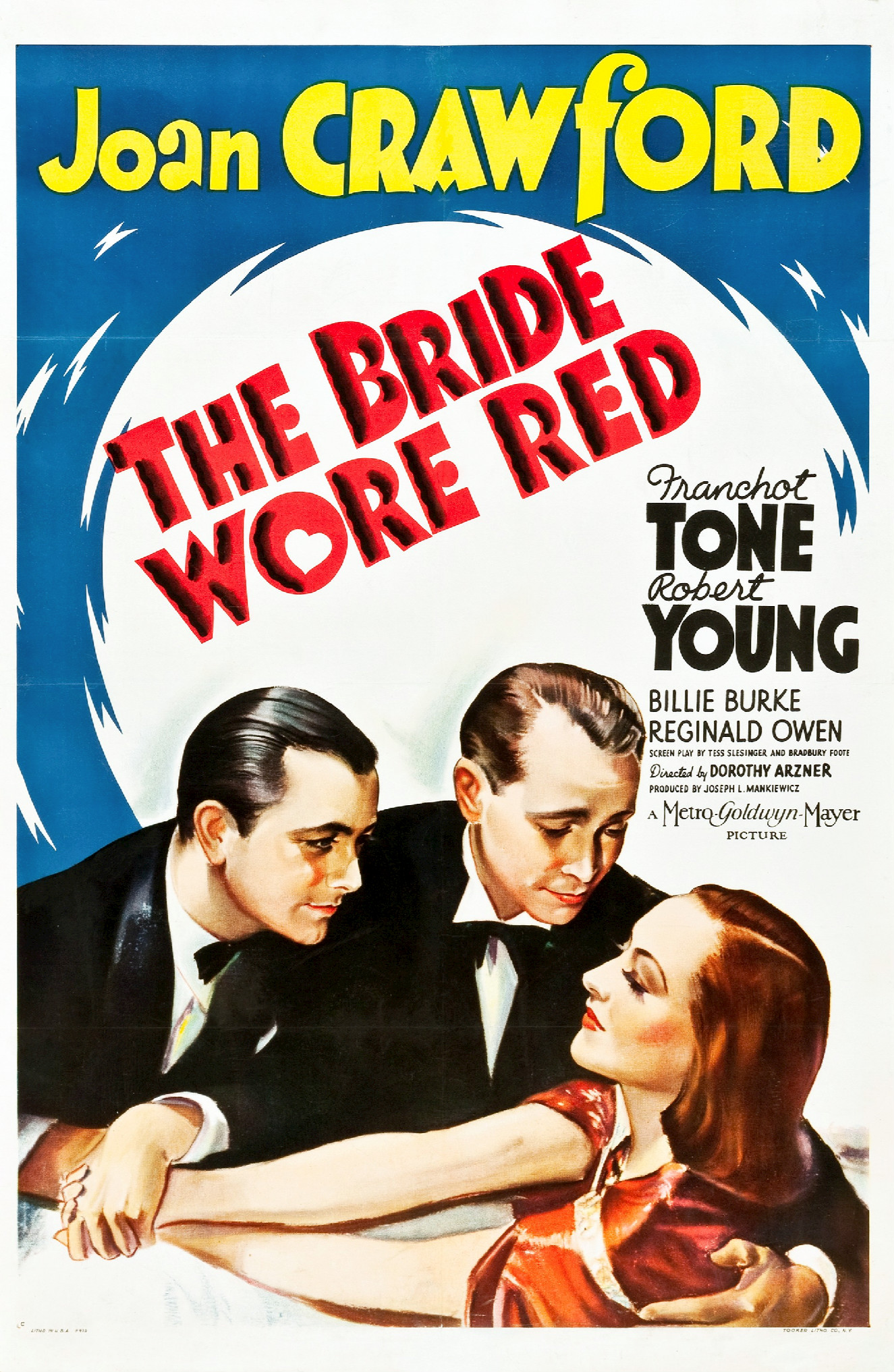
While the gap between the wealthy and the working class has grown even wider since the film was made, I'm sure this farcical set-up was hard to swallow even back in 1937. Arzner has moments to shine as a filmmaker, eliciting great performances from her cast and subtly upending traditional views of women of the day. But the sluggish script by Tess Slesinger and Bradbury Foote works against her adding very little romance and barely any comedy. "The Bride Wore Red" is essentially nothing more than a star vehicle for Crawford and with only that in mind, the film is highly effective. With her looking stunning in dramatic, gorgeous costumes and displaying her lion in sheep's clothing screen persona, fans of this legendary actress will be thrilled. But for fans of amusing romantic-comedies, the thrills will be far more limited.
"The Perfection" (2019)
"The Perfection" (2019)

"The Perfection" plays like vintage Brian De Palma, ripe with a meticulously plotted story, high-tension melodrama, hyper-violence and overheated sexuality. But one key touch that Shepard employs is that once the story reaches a climatic moment, we visually rewind back to the beginning of the scene, revealing all of the hidden secrets and deceptions we were unaware had previously occurred. This happens twice in the film and while some may find this a bit of a cheat, there is no denying that it does knock you over with some shocking jolts.
"The Perfection" is certainly an inspired horror flick, shaking up convention and our expectations of what we have come to anticipate from the genre. But like some De Palma films, a little more care with the screenplay, in order for some key plot twists to seem less haphazard and other revelations to not feel so exploitive, would have made for a sharper and unforgettable thriller.
Thursday, September 10, 2020
WOMEN MAKE FILM
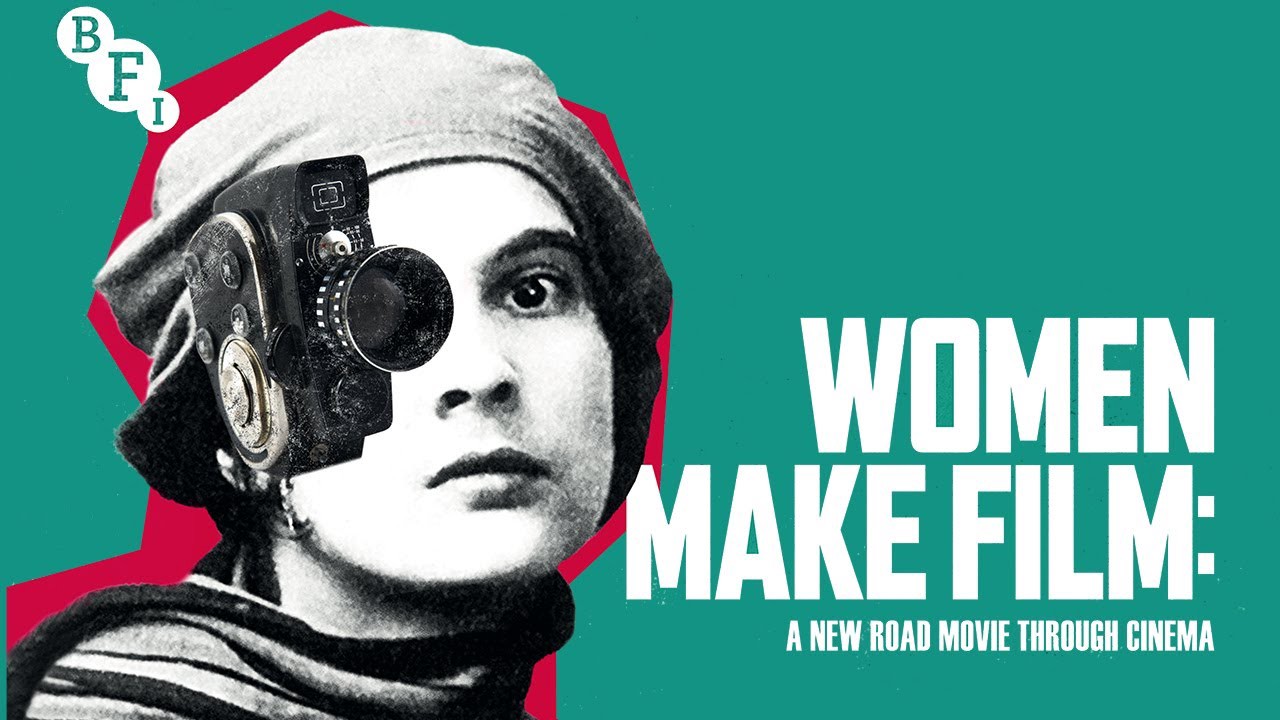
"Women Make Film" is a fourteen-hour documentary film from filmmaker and critic, Mark Cousins. This timely project is a celebration, placing a much needed spotlight on female filmmakers from around the world and throughout history, some that certainly have not received the recognition that they and their influential work deserve. With narration from a cast of international performers, Adjoa Andoh, Jane Fonda, Kerry Fox, Thandie Newton, Tilda Swinton, Sharmila Tagore and Debra Winger, this "road movie through cinema" is divided into forty chapters and features the work of one hundred and eighty-three directors. The director Cousins has not made a conventional doc, offering an introspective, almost academic, exploration on how their films are shaped and how they inventively depict love, life and death through the cinematic lens.
"Women Make Film" originally made it's premiere at the 2018 Venice Film Festival and is now being shown on Turner Classic Movies as one-hour episodes on Tuesdays beginning this month through December. TCM hosts, Alicia Malone and Jacqueline Stewart, will do the introduction before each showing and then will screen some of the films discussed in that installment on the channel. This is a wonderful opportunity to learn about some of the unsung talent of cinema and discover their extraordinary movies.
"Women Make Film" originally made it's premiere at the 2018 Venice Film Festival and is now being shown on Turner Classic Movies as one-hour episodes on Tuesdays beginning this month through December. TCM hosts, Alicia Malone and Jacqueline Stewart, will do the introduction before each showing and then will screen some of the films discussed in that installment on the channel. This is a wonderful opportunity to learn about some of the unsung talent of cinema and discover their extraordinary movies.
Monday, August 31, 2020
MY VIEWING DIARY: PART NINE
"Lenny" (1974) Since he spent most of his career as a dancer and highly inventive choreographer for the stage, Bob Fosse did not have much of an opportunity to leave behind an extensive body of work once he decided to focus on film making. A driven workaholic combined with an unhealthy lifestyle, Fosse died of a heart attack by the age of sixty.

"The Opposite Sex" is based on Clare Boothe Luce's 1936 play, "The Women" which was adapted in to a delightfully camp comedy in 1939. But this inert remake isn't much fun, having awkwardly been turned in to a musical set in the world of the theater and the physical presence of men is featured prominently throughout the film. With their attempt to open up the story, the director, David Miller and writing team of Fay and Michael Kanin has made a conventional 1950's Metrocolor rom-com with the significant altering of the structure and tone of the story not helping matters.

He was an incredibly gifted director yet would only make five feature films; the movie adaptation of the stage musical-comedy, "Sweet Charity" (Fosse's film debut which he had also directed and choreographed the original Broadway show); "Cabaret", another adaptation of a Broadway musical which would win eight Academy Awards (including Best Director for Fosse); "All That Jazz", the semi-autobiographical musical-drama that was nominated for nine Oscars and won four; "Star 80", a fact-based drama on the tragic murder of Playboy playmate, Dorothy Stratten and "Lenny" which was the only film by Fosse I had not yet seen.
This stylish bio-pic examines the life and career of Lenny Bruce, a New York comedian in the 1960's who would challenge the obscenity laws on what could be said on stage, ultimately paying a high price for his defiance. Dustin Hoffman (in one of his greatest screen performances) play Bruce, a Jewish comic who struggles trying to do the standard comedy routine. He falls hard for a stripper named Honey Harlow (Valerie Perrine, who won the Best Actress Award at the 1975 Cannes Film Festival), who he calls his "Shiksa goddess" and they marry quickly. After the couple moves to Los Angeles, Bruce begins to riff on stage invovling subjects that are not usually discussed in public with language that some considered highly inappropriate. And while he would achieve great success and popularity, Bruce would be arrested frequently for charges of obscenity. This was also when he and his wife would become severely addicted to drugs, causing them to suffer marital issues and additional legal problems.
What makes "Lenny" particularly intriguing was how Fosse assembled the film, shooting in exquisite black & white (with cinematography by Bruce Surtees) and using a non-linear story structure which was not commonly done at the time, particularly with American films. "Lenny" only highlights key moments in the chaotic life and controversial routines of the comedian, not giving us a complete picture of his importance as a historical figure. This film does reveal that while his motivations may have been self-serving and short-sighted at the time, Bruce's legal challenges for his First Amendment rights would help open the door for all performers to express themselves uncensored without fear of criminal indictment.
"The Opposite Sex" (1956)

"The Opposite Sex" is based on Clare Boothe Luce's 1936 play, "The Women" which was adapted in to a delightfully camp comedy in 1939. But this inert remake isn't much fun, having awkwardly been turned in to a musical set in the world of the theater and the physical presence of men is featured prominently throughout the film. With their attempt to open up the story, the director, David Miller and writing team of Fay and Michael Kanin has made a conventional 1950's Metrocolor rom-com with the significant altering of the structure and tone of the story not helping matters.
The casting also leaves a lot to be desired with bland MGM musical star, June Allyson playing Kay Hilliard, a former popular nightclub performer who gave it all up for love, marriage and family. But when Kay's frenemy, Sylvia Fowler (Dolores Gray) hears the gossip that Kay's husband, Steven (Leslie Nielsen), a producer of an upcoming Broadway musical, is having an affair with a dancer in the show, Crystal Allen (Joan Collins, struggling with a wobbly American accent), she can't wait to spread this dirt. It's not long before this news reaches Kay and while she still loves her husband, sadly heads off to Reno to end her marriage. During her stay at a ranch for divorcees run by the butch, Lucy (Charlotte Greenwood), Kay befriends fellow soon-to-be-single-again gals, Gloria Dell (Ann Miller) and the Countess Lavaliere (Agnes Moorehead), avoids a clumsy seduction by the ranch hand, Buck (Jeff Richards) and has to deal with Sylvia who arrives to end her own marriage. And when Kay discovers that Crystal is being unfaithful to Steven, she decides to try and win her ex-husband back.
That this "contemporary" version (which also features Ann Sheridan and Joan Blondell) manages to feel even more dated today than the original eighty-one year old film is actually quite a feat. And although the musical numbers fit organically in to the show-business setting, these lame songs and garish production fail to ignite any magical sparks.
"Lady of Burlesque" is a silly, musical-comedy-mystery caper about some strippers who are being strangled to death while on the job with their own g-strings. Based on the aptly titled book, "The G-String Murders", allegedly written by the world-famous strip-tease artist, Gypsy Rose Lee whose colorful life would be the basis of the classic stage musical (and later movie), "Gypsy". The only reason to even consider watching this low-budget hooey is for the dazzling star presence of Barbara Stanwyck. The actress gives her all singing, dancing and displaying her expert comedy chops but it is all sadly wasted here.
"Lady of Burlesque" (1943)

"Lady of Burlesque" is a silly, musical-comedy-mystery caper about some strippers who are being strangled to death while on the job with their own g-strings. Based on the aptly titled book, "The G-String Murders", allegedly written by the world-famous strip-tease artist, Gypsy Rose Lee whose colorful life would be the basis of the classic stage musical (and later movie), "Gypsy". The only reason to even consider watching this low-budget hooey is for the dazzling star presence of Barbara Stanwyck. The actress gives her all singing, dancing and displaying her expert comedy chops but it is all sadly wasted here.
Stanwyck plays Dixie Daisy, a new attraction at the Old Opera, a New York burlesque theater on 42nd Street. The crowd loves her and she also captures the attention of Biff Brannigan (Michael O'Shea), a comedian at the club. Daisy, who has found that comedians are better with jokes than romance, is not interested. During a raid of the theater, someone tries to strangle Dixie but she escapes her attacker. However, another dancer, Lolita La Verne (Victoria Faust) is not so lucky, ending up dead with her undergarment wrapped around her neck. After another performer has been murdered, we have plenty of possible suspects yet there never seems to be much of an urgent concern to capture the killer. Even though someone that they all work with is, um, killing their fellow co-workers and the bodies are piling up in the theater yet the show continues to go on.
"Lady of Burlesque" is set in a world where scantily-clad ladies seductively remove what little items of clothing they have on. Yet there isn't much skin to be seen here. That is because the Hays Code was in full effect, making sure nothing objectionable ever made it on to the the big screen. So William A. Wellman (the director behind the first Oscar winner for Best Picture, "Wings" and the first version of "A Star Is Born" in 1937) winds up having to rely on uninspired musical numbers and routine comedy skits to move the story along. As the film aims for wanting to be viewed as titilating, harmless fun, "Lady of Burlesque" is actually unsettling and a little ghoulish. Oh, and forget about the mystery. This is one of those who-dun-it where there are never any actual clues dropped and everything is explained with a lengthy conversation at the end.
Sunday, July 26, 2020
MY VIEWING DIARY: PART EIGHT
"Only When I Laugh" (1981)
 The first thing I was reminded of when I re-watched the dramatic comedy, "Only When I Laugh" from director, Glenn Jordan, is the phenomenal yet underrated talent of Marsha Mason. This warm and charming actress never became a major star like she should have despite receiving some of her best movie roles from her then-husband, the prolific playwright, Neil Simon with Mason getting three of her four Best Actress Oscar nominations from his screenplays (including her performance in this film).

Based on Simon's 1970 play, "The Gingerbread Lady", Mason plays Georgia Hines, a theater actress who has just been released from rehab for a serious problem with liquor. She's determined to get her life back together with the help of close friends, Jimmy (James Coco), a gay struggling actor and Toby (Joan Hackett), a wealthy socialite. One relationship she desperately wants to repair is with her teenage daughter, Polly (played by Kristy McNichol, an Emmy Award-winning, popular child star who retired from acting in 1998). Currently living with her father and his new wife, Polly wants to move-in with her mother and Georgia reluctantly agrees. While only wanting to focus on her recovery, Georgia receives the script for a new play from her former lover, David (David Dukes) which is based on their alcohol-fueled affair and wants her to play the lead. And not wanting to turn down a great part in a Broadway show, she accepts the offer. But the rehearsals trigger old stresses and habits that are not helpful to Georgia maintaining her goal of sobriety.
Following in the tradition of humorous tearjerkers like "Terms of Endearment" (which actually is still the greatest example), "Only When I Laugh" uses sharp wit and laugh-out-loud jokes to enliven this exploration in to the continuing struggle of a person's recovery from addiction and the painful trauma it causes their loved ones. And while this film is nowhere near in the same league as that Oscar-winning classic nor even the best work from Neil Simon, "Only When I laugh" is still quite moving and highly enjoyable. All of the performances are wonderful and be on the look-out for a brief appearance by Kevin Bacon in one of his early big-screen roles.
"Knife In The Water (Nóż w wodzie)" (1962)
There was a time, not really so long ago, when Roman Polanski was a revered filmmaker behind such classics as "Repulsion", "Rosemary's Baby", "Chinatown" and "The Pianist". But his accomplished work as a director has been long overshadowed and somewhat diminished through the years due to his personal tragedies and several recent accusations of sexual assault. This has lead to Polanski (who won the Best Director Oscar for "The Pianist" in 2002) even being kicked out as a member of the Academy of Motion Picture Arts and Sciences in 2018. And just like with Woody Allen, there have been plenty of arguments regarding whether the films of these once celebrated yet now disgraced directors should be cancelled along with the men behind them.
"Knife In The Water (Nóż w wodzie)" (1962)
 |
The truth of the matter is that nothing about these wonderful and vital movies has changed except your opinion about the directors. I realize that some cannot separate the two and that is perfectly fine. I however do not share in that point-of-view which leads me to my review of the debut feature from Mr. Polanski with "Knife In The Water" from 1962. What I find most impressive about this early drama is that it displays much of the skill and confidence that the then-twenty-nine year old director would utilize in his future cinematic endeavors.
Set in Polanski's native Poland, a couple, Andrzej (Leon Niemczyk) and Krystyna (Jolanta Umecka), drive to the lake to sail on their boat when they almost run over a hitchhiker (Zygmunt Malanowicz). As an offer to apologize, they drive him to the marina when the callous and bored Andrzej decides to invite the young man along on their sailing trip, more for amusement than his company. While the day is mostly tranquil and leisurely, the boat is filled with tension; marital discord between Andrzej and Krystyna, macho rivalry between the men and sexual tension sizzling between Krystyna and the young man. And while not much happens in "Knife In The Water" during this boating excursion, all of this tension eventually combusts. Yet the film remains more of a psychological drama than a thriller. Oh, there is a knife and it does end up in the water but how and why this occurs is not exactly what you would expect, perfectly displaying the brilliance and power of Polanski as a filmmaker.
"Just Mercy" (2019)
 Based on his memoir and disturbing true story, "Just Mercy" examines the first case of Bryan Stevenson, a young defense attorney who travels to the South to work for death-row inmates who cannot afford proper legal representation.
"Just Mercy" (2019)

Michael B. Jordan plays Stevenson, a recent Harvard graduate who starts a non-profit called the Equal Justice Initiative to do legal work largely for the poor African-American community in Alabama. With the assistance of Eva Ansley (Brie Larson), a local wife and mother, Stevenson starts to work on the case for Walter "Johnny D." McMillian (Jamie Foxx), an African-American man convicted of the 1986 murder of Ronda Morrison, a white woman and based solely on the questionable testimony of convicted felon, Ralph Myers (Tim Blake Nelson). And while Stevenson uncovers important evidence that was withheld during McMillian's trial, he fails to understand the ugly, deep-rooted traditions of Alabama law enforcement and the legal system. But Stevenson is tenacious and more than willing to take on this racist system to make sure that justice will truly be served.
As only the third feature film from director, Destin Daniel Cretton (following the excellent "Short Term 12" and "The Glass Castle"), he continues to impress by making substantial and meaningful dramas for the big screen which is sadly becoming far less common. The director, who co-wrote the screenplay, gets some outstanding performances from his actors, particularly from Mr. Jordan and Mr. Foxx. The film does initially defines many of the characters based upon regional and racial expectations yet as the drama progresses we discover that some are far more complex, tentative and charitable than expected. "Just Mercy" places an important spotlight on the long-standing injustice and inequities that African-Americans face in the American legal system and how we must continue to fight and demand change.
Wednesday, June 17, 2020
MY VIEWING DIARY: PART SIX
As Los Angeles begins to open back up after months of a shut-down, allowing some of life's pleasures to resume as we once knew, there seems to be one glaring omission. Movie theaters in the city have strangely still not been given an approval to reopen although department stores, gyms, day-care centers, summer camps, museums, restaurants and even film production all have been allowed to continue under strict guidelines. I guess I wasn't aware of how life-threatening going to the movies must be compared to sweating and breathing heavy in a gym.
Now there is a problem with movies resuming across the country. Nervous studios keep delaying their upcoming major releases which means that movie theaters don't have anything new to screen which means audiences have no incentive to return to the theaters. I'm sure this will be sorted out at some point and we will ultimately have something of a summer movie season. In the meantime, I'm still at home watching movies. I have purchased new films to stream a couple of times yet it's just not very satisfactory to me. Call me old-fashioned, that's perfectly fine but I know what I like. If I'm spending top dollar for a new release, I want a big screen and popcorn to complete the experience. Anyway, here are a couple of films I watched in honor of LGBTQ month:
"Victim" (1961)
 When the British drama, "Victim" from director, Basil Dearden was released in 1961, it was met with emphatic calls for censorship from the British Film Board and the US Production Code refused to give the film it's seal of approval. The fuss over this movie was simply because it dealt directly with the issue of homosexuality (which the act was illegal in the United Kingdom until 1967) and many believed that the subject was far too distasteful for the average movie-goer. But "Victim" was ultimately released in both countries and while it was hardly a box-office smash, the film received some critical praise and found a receptive audience, helping (in a small way) towards changing attitudes on homosexuality, at least in Britain.
Now there is a problem with movies resuming across the country. Nervous studios keep delaying their upcoming major releases which means that movie theaters don't have anything new to screen which means audiences have no incentive to return to the theaters. I'm sure this will be sorted out at some point and we will ultimately have something of a summer movie season. In the meantime, I'm still at home watching movies. I have purchased new films to stream a couple of times yet it's just not very satisfactory to me. Call me old-fashioned, that's perfectly fine but I know what I like. If I'm spending top dollar for a new release, I want a big screen and popcorn to complete the experience. Anyway, here are a couple of films I watched in honor of LGBTQ month:
"Victim" (1961)

Dirk Bogarde plays Melville Farr, a successful barrister (a lawyer to the Yanks) who is on his way to being appointed as a judge. Happily married with a lovely wife, Laura (Sylvia Syms), life appears very good for Farr. But he has being carrying a deep, dark secret; Farr is attracted to men. Jack "Boy" Barrett (Peter McEnery), a young working class man who Farr had a close friendship, tries desperately to contact him, even calling him at his home. Farr refuses to speak to him, fearing Barrett wants to blackmail him about their affair. But it's Barnett who is actually being blackmailed over a suggestive photo of him with Farr. After being arrested for stealing from his employers to pay Sandy Youth (Derren Nesbitt), the leader of the blackmail ring, Barnett feels he no longer has anything to live for. When Farr discovers the truth, he goes to other victims of the blackmailers in order to encourage them to help him fight back against them.
By today's standards, "Victim" is far too routine and discreet. Yet in it's day, this was considered a daring political statement and highly explosive subject matter. Mr. Bogarde delivers a compelling performance as a coldly, reserved man who we watch visibly transform as he begins to accept and become more honest with himself. Many critics referred to Bogarde's appearance here as "courageous" and to be honest, it was brave for the popular British actor to take on this role as it certainly could have derailed his career during this time. Even though most of the Pride parades, festivals and parties have been cancelled this year, that doesn't mean we should not continue to celebrate the LGBTQ communities this month. "Victim" serves as a potent reminder of a time, not that long ago, when being gay was a criminal offense and how lives could easily be destroyed if this information went public. We have come very far yet, as hate crimes against gays and the senseless deaths of trans people continue to rise, we still have far to go.
"Sunday Bloody Sunday" (1971)
 "Sunday Bloody Sunday", a drama from director, John Schlesinger, deals with a subject that has still been rarely tackled in cinema: bisexuality. Peter Finch plays Daniel Hirsh, a middle-aged, closeted gay doctor. Glenda Jackson is Alex Greville, a divorcee seeking some excitement. What they have in common is Bob Elkin (Murray Head), a carefree, young man who creates art instillations. And he is the lover of them both.
"Sunday Bloody Sunday" (1971)

As Bob drifts between Daniel and Alex, unwilling to settle down, the idea of knowingly having to share for the affections of the mercurial young artist becomes far more difficult as each wants to spend more time with him. But since the story is set in Britain, this complicated love triangle remains very civilized with stiff upper lips, deeply suppressed emotions and voices rarely ever being raised. As we watch Bob going back and forth, loving and manipulating each partner, the film seems to point out that free love and open relationships tends to work out better in concept than execution.
Mr. Schlesinger, who had directed the only X-rated film to win a Best Picture Oscar with his previous film, "Midnight Cowboy", wanted to push the boundaries of what could be shown in film even further with this provocative story that features chaste yet still daring love scenes between the two men. What was also surprising (and very refreshing) was that neither Bob nor Daniel, although they are both discreet, never agonized over their sexuality or relationship.
The only character we see really suffering is Alex who is also having difficulties with her dead-end job in addition to the growing frustration about her love life. And Ms Jackson's performance is the true standout here. The actress commands every scene in which she appears, managing to make Alex's brooding and caustic wit utterly charming. I also realized that this is the first time I have seen a screen performance by the acclaimed, two-time Oscar-winning, now-eighty-four year old Jackson and I have been missing out. And be on the look-out for a fourteen year old Daniel Day-Lewis making his uncredited film debut as the future three-time Best Actor Oscar-winner appears very briefly as one of a group of children causally damaging cars with broken glass and coins.
Subscribe to:
Posts (Atom)